
- Popular types: Apistogramma, Ram cichlids, Kribensis
- Tank size: 15–30 gallons depending on species
- Behavior: Semi-peaceful, but still cichlids… so yeah, attitude exists
- Best setup: Planted tanks with hiding spots
- Tank mates: Small, calm fish like those in Corydoras Catfish Care Guide
- Water conditions: Soft, slightly acidic for most species
- Breeding: Easy for some species, chaotic for others
- Common mistake: Underestimating their territorial behavior
Dwarf Cichlid Varieties
1. Wait… what even counts as a dwarf cichlid?
You ever see a “small cichlid” and think, ok that’s manageable… and then it turns into a tank boss? yeah, happens a lot.
Dwarf cichlids are basically smaller species of cichlids that stay under about 3–4 inches. Sounds simple, but their size doesn’t really match their personality sometimes.
They still have that typical cichlid behavior:
- Territorial
- Curious
- Sometimes a bit dramatic
I remember getting my first pair thinking they’d act like community fish… nope. Not aggressive all the time, but definitely not passive either.
So yeah, small size doesn’t mean “easy fish,” just more manageable compared to big ones like those in Top 5 Monster Fish That Actually Stay Manageable.
2. Apistogramma – Small fish, big personality

Ever heard someone say “apistos are peaceful”? yeah… depends on the day.
Apistogramma species are probably the most popular dwarf cichlids, and for good reason. They’re colorful, interesting, and pretty interactive.
Common Types
- Apistogramma cacatuoides
- Apistogramma agassizii
- Apistogramma borellii
What they’re like
- Males get territorial
- Females guard caves aggressively
- Prefer planted tanks with hiding spots
I kept a pair once, and the female basically claimed half the tank during breeding. Didn’t matter what fish it was, she chased it away.
If you’ve seen setups like Breeding Aquarium Fish Tank Companions Complete Care Guide, you’ll understand why hiding spaces matter so much here.
3. Ram Cichlids – Calm… but kinda sensitive
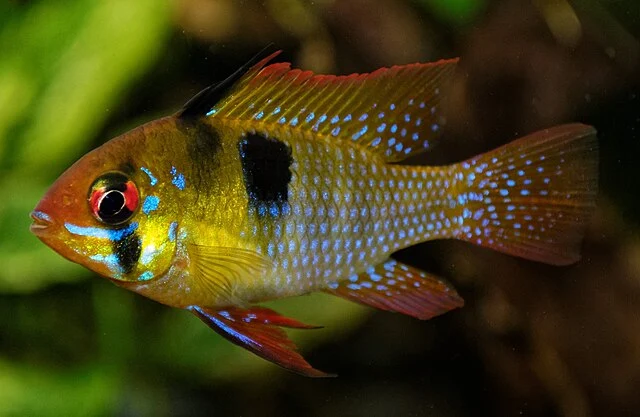
So rams look peaceful, right? yeah they do, but they’re also a bit fragile.
Ram cichlids, especially German Blue Rams, are popular but need more stable conditions than most dwarf cichlids.
Types of Rams
- German Blue Ram
- Electric Blue Ram
- Bolivian Ram
Behavior
- Generally peaceful
- Slight territorial behavior
- Works well in community tanks
I tried keeping them without paying much attention to water stability… didn’t go well. They need consistent conditions, similar to what you’d see in Discus Fish Tank Requirements.
So yeah, easy to keep visually, but not forgiving if you mess up water quality.
4. Kribensis – Beginner friendly, but still feisty

If you’re new to dwarf cichlids, kribensis are usually the go-to. But don’t let that fool you.
They’re easier, sure, but once they start breeding… different story.
Key Traits
- Hardy and adaptable
- Easy to breed
- Strong parental behavior
What to expect
- Calm most of the time
- Aggressive during breeding
- Protect their territory seriously
I once had a pair breed in a community tank, and suddenly they controlled the entire bottom area. Even larger fish stayed away.
So yeah, beginner friendly… until they decide otherwise.
5. Tank Setup – What kind of environment do they need?
Let me ask you this… would you feel safe living in an open tank with nowhere to hide? yeah, same logic applies.
Dwarf cichlids need structure.
Ideal Setup
- Sand substrate
- Caves (rocks, coconut shells)
- Plants for cover
- Stable filtration (10 Best Aquarium Filters for Freshwater & Reef Tanks)
Equipment Basics
- Heater (7 Best Aquarium Heaters Tested & Reviewed)
- Moderate lighting (Best LED Aquarium Lights Compared 2026 Buyer’s Guide)
I noticed that once I added more caves, aggression dropped a lot. Fish just stayed in their own spaces instead of fighting over territory.
6. Tank Mates – Who actually works with them?
This part needs some thought, because not all community fish work here.
Good Tank Mates
- Tetras
- Rasboras
- Corydoras (Corydoras Catfish Care Guide)
Fish to Avoid
- Aggressive cichlids
- Large fish
- Very slow or timid fish
I tried mixing them with angelfish once, based on Angelfish Habitat and Behavior, and it worked… but only because the tank was large enough.
So yeah, space and layout matter a lot.
7. Behavior – Why do they act so… dramatic?
Ever seen a tiny fish act like it owns the tank? that’s dwarf cichlids for you.
They’re smart, aware of their space, and very reactive to changes.
Common Behaviors
- Territory guarding
- Digging substrate
- Displaying colors during stress or breeding
Some people think they’re aggressive, but honestly, they’re just very aware of their environment.
Compared to peaceful fish like those in Guppy Fish Care & Breeding, dwarf cichlids feel more intense.
8. Final Thoughts – Which dwarf cichlid should you pick?
So which one should you go for? depends on what you want.
Quick Picks
- Want easy care → Kribensis
- Want color + personality → Apistogramma
- Want peaceful look → Ram cichlids
Just don’t expect them to behave like basic community fish. They have personality, and sometimes that personality causes a bit of chaos.
I still keep a small group, and honestly, they’re way more interesting than most fish. Slightly unpredictable, yeah… but that’s part of why people like them.
FAQ – Dwarf Cichlid Varieties
Are dwarf cichlids aggressive?
Not always, but they can be territorial, especially during breeding.
Can they live in community tanks?
Yes, with the right tank mates and setup.
Do they need caves?
Yes, hiding spots reduce stress and aggression.
Which is easiest for beginners?
Kribensis are usually the easiest to start with.
Do they need soft water?
Most species prefer it, especially Apistogramma and Rams.