Ever wondered why your aquatic turtle looks at you with those big glassy eyes every time you walk past the tank? They are literal garbage disposal units on legs, I swear! But dumping random leftovers in their water will wreck their liver faster than you can clean the filter.
When my red-eared slider was young, I fed him way too many commercial sticks because it was easy. His shell started growing unevenly, and I had to learn real quick how to mix up a proper menu. Young aquatic species are heavy carnivores, but as they age, their bodies need way more plant power.
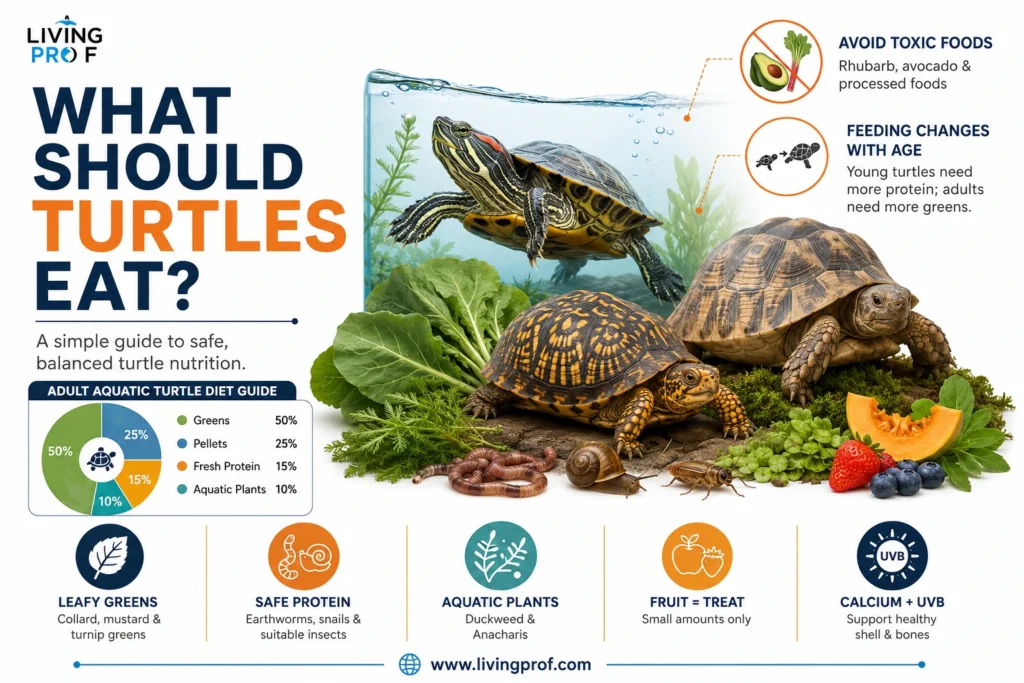
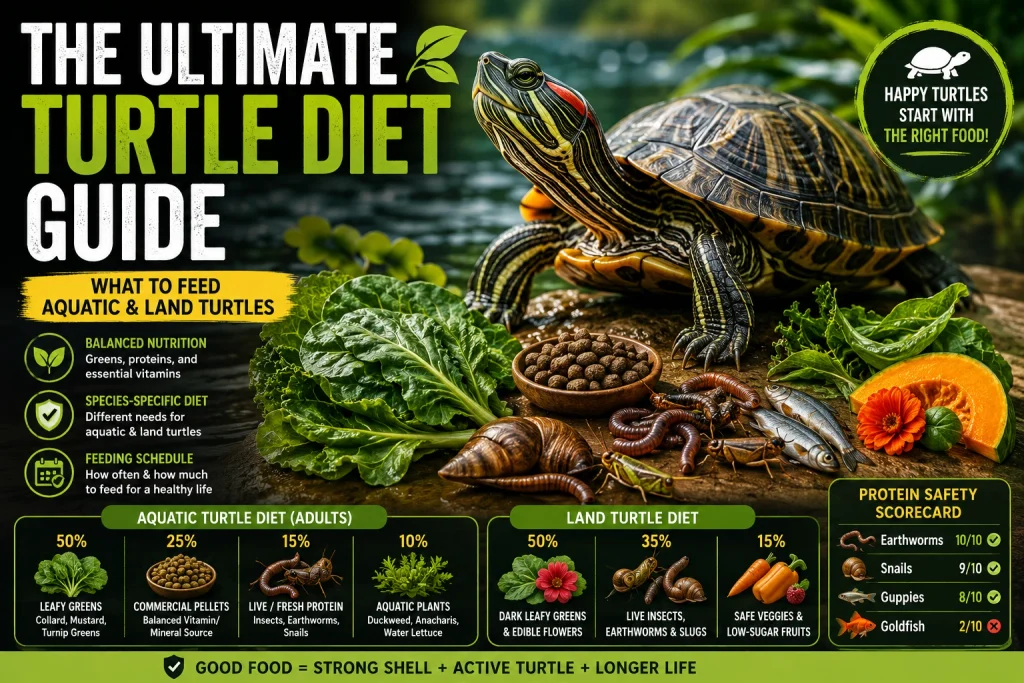
Aquatic Turtle Diet Breakdown (Adults):
├── Leafy Greens (50%) -> Collard, Mustard, Turnip Greens
├── Commercial Pellets (25%) -> Balanced Vitamin/Mineral Source
├── Live/Fresh Protein (15%) -> Feeder Insects, Earthworms, Snails
└── Aquatic Plants (10%) -> Duckweed, Anacharis, Water Lettuce
You want to throw in dark leafy greens that float right on top of the water. Things like dandelion greens, collard greens, and turnip greens work absolute wonders. If you need to quickly check if a specific green is safe or toxic, run it through this Reptile Food Safety Checker before tossing it into the tank.
- Dandelion Greens: Packed with calcium, which keeps their shell rock hard.
- Collard & Mustard Greens: High in Vitamin A, super vital for preventing swollen eyes.
- Aquatic Plants: Duckweed and Anacharis are awesome because they double as tank decor until your shelled friend eats them!
- Commercial Pellets: Pick reputable brands like Mazuri or Zoo Med to fill in the tiny nutrition gaps.
Don’t feed them iceberg lettuce, ever. It’s basically crunchy water with zero nutritional value, and it gives them nasty diarrhea that ruins your water parameters. If you ever mess up the feeding schedule and want to fix their baseline routines, check out this handy Reptile Feeding Schedule tool to get back on track.
What Proteins Are Completely Safe For Water-Dwelling Turtles?
How often do you see your turtle wildly chasing down a stray feeder fish in the tank? It’s pure comedy watching their awkward hunting moves! Live foods offer mental stimulation, but you have to pick the right prey, or you’ll run into internal parasite problems.
Safe Protein Options:
1. Earthworms & Nightcrawlers (Super rich in calcium, easy to digest)
2. Aquatic Snails (Great for shell wear and calcium)
3. Crickets & Dubia Roaches (Gut-load them first!)
4. Feeder Guppies or Endlers (Avoid goldfish due to thiaminase)
I used to buy cheap goldfish from the pet store until my vet scolded me. Goldfish contain high levels of thiaminase, an enzyme that blocks Vitamin B1 absorption and causes serious neurological issues over time. Instead, offer them safe live items that actually match their natural hunting habits.
If you keep peaceful community species, you might realize some fish are just too fast or toxic to be food. For instance, if you’re curious about peaceful cohabitants that won’t end up as a snack, check this guide on the best freshwater community fish combinations peaceful setup.
PROTEIN SAFETY SCORECARD:
[Earthworms]   --> 10/10 (Nutritional perfection)
[Snails]       -->  9/10 (Great calcium, hard shell exercise)
[Guppies]      -->  8/10 (Fun chase, clean protein)
[Goldfish]     -->  2/10 (Thiaminase hazard, super fatty)
Always source your insects from clean pet supply stores. Wild-caught bugs from your yard can easily harbor nasty pesticides or internal parasites that will wreck your pet’s digestive tract.
What Do Land Turtles And Box Turtles Need On Their Plate?
Why do land turtles act like total diva food critics the second you offer them something green? If it isn’t moving or brightly colored, my box turtle will literally turn her back on me and walk away! Land dwellers like eastern box turtles or Asian leaf turtles need a completely different approach than aquatic sliders.
Land turtles rely heavily on a balance of humidity, forest forage, and high-fiber vegetation. They love foraging through substrate to dig up worms, fallen fruits, and fresh weeds.
Land Turtle Plate Distribution:
+--------------------------------------------------+
| 50% Dark Leafy Greens & Edible Flowers           |
| 35% Live Insects, Earthworms & Slugs             |
| 15% Safe Veggies & Low-Sugar Fruits              |
+--------------------------------------------------+
Mixing in colorful veggies like grated carrots, butternut squash, and bell peppers triggers their feeding response fast. If you ever care for native land or semi-aquatic species like the Sri Lankan Black Turtle, you’ll notice they rely on native fallen fruits and worms just as much as greens.
- Leafy Base: Collard greens, dandelion leaves, endive, and escarole.
- Insects: Earthworms, mealworms, waxworms (as a fatty treat), and crickets.
- Edible Flowers: Hibiscus blooms, dandelion flowers, and nasturtiums (they love red/yellow colors)!
- Veggies: Shredded squash, zucchini, and sweet potato.
IMO, keeping their diet varied is the single best thing you can do to avoid stubborn hunger strikes. Land turtles get bored easily if you serve the exact same bowl three times in a row.
Are Fruits Safe For Turtles Or Is It A Bad Idea?
Is it true that sugar ruins a turtle’s gut health? Yes, absolutely! Tossing a piece of banana to a turtle feels rewarding because they devour it instantly, but too much fruit causes crazy bacterial blooms in their intestines.
FRUIT SAFETY TIER LIST:
┌─────────────────────────┬─────────────────────────┬─────────────────────────┐
│ SAFE (Occasional Treat) │ USE WITH CAUTION        │ AVOID COMPLETELY        │
├─────────────────────────┼─────────────────────────┼─────────────────────────┤
│ Blueberries             │ Bananas (Sticky/High    │ Citrus (Orange, Lemon)  │
│ Strawberries            │ Sugar)                  │ Rhubarb (Toxic)         │
│ Cantaloupe              │ Apples (Remove Seeds!)  │ Avocados (Persin toxin) │
└─────────────────────────┴─────────────────────────┴─────────────────────────┘
Fruits should only make up around 5% to 10% of a land turtle’s total intake, and basically 0% to 5% for aquatic species. High sugar levels cause explosive diarrhea and mouth rot over prolonged periods.
If you want to treat them without risking their health, stick to dark berries like blueberries or small melon cubes. Always scrape off any leftover fruit pieces from the enclosure within an hour, or you’ll be fighting fruit flies for weeks!
What Foods Are Strictly Toxic And Should Be Avoided?
Ever wondered if standard kitchen vegetables could actually hurt your pet? It sounds wild, but plenty of staple human foods are straight-up poisonous to reptiles!
TOXIC FOODS MATRIX:
+-------------------+-----------------------------------+----------------------------------+
| Food Item         | Toxic Component                   | Health Risk                      |
+-------------------+-----------------------------------+----------------------------------+
| Spinach & Parsley | High Oxalates                     | Binds Calcium, Shell Softening   |
| Rhubarb           | Calcium Oxalate Crystals          | Severe Kidney Damage / Fatal     |
| Avocado           | Persin Toxin                      | Heart Failure                    |
| Processed Meats   | Excessive Sodium & Preservatives  | Kidney Strain, Dehydration       |
| Dairy (Cheese/Milk)| Lactose                          | Inability to Digest, Gut Rot     |
+-------------------+-----------------------------------+----------------------------------+
Oxalates are the silent killer here. Foods like spinach, beet greens, and parsley bind to dietary calcium, preventing your turtle’s body from absorbing it properly. This leads straight to metabolic bone disease, where their shell turns squishy like a wet cardboard box.
If your turtle ever develops respiratory issues or shell soft spots from poor nutrition, read up on common reptile diseases symptoms treatment guide to spot warning signs early. Also, never feed them cat or dog food on a regular basis—the protein content is way too dense and destroys their kidneys over time.
How Do You Balance Calcium And Vitamin Supplements Correctly?
Why do so many captive turtles suffer from deformed shells even when they eat their greens? Because without proper calcium powder and UVB lighting, their body can’t build bone tissue!
Calcium Supplementation Process:
Step 1: Dust live insects/greens with Calcium + D3 powder 2x weekly.
Step 2: Place a cuttlebone in aquatic tanks for self-regulated calcium grazing.
Step 3: Ensure UVB lighting is active and replaced every 6-12 months.
I keep a cuttlebone floating in my aquatic tank at all times. My turtles love nipping at it whenever their body craves extra minerals, plus it helps wear down their overgrown beak naturally!
If you keep your turtle indoors, dusting their food with a high-quality Calcium + Vitamin D3 powder twice a week is mandatory. Without Vitamin D3, their body literally cannot process the calcium you feed them, no matter how much collard greens they chew on.
How Often Should You Feed Young Versus Adult Turtles?
Do you know how easy it is to overfeed a turtle that begs for food every single minute? They are complete master manipulators! They will splash water at the front glass like they are starving, even if they ate an hour ago.
FEEDING FREQUENCY SCHEDULE:
 Hatchlings / Juveniles (Under 1 Year):
 └── Feed ONCE daily (Protein heavy: worms, pellets, small insects)

 Young Adults (1 - 3 Years):
 └── Feed EVERY OTHER day (50/50 balance of greens and protein)

 Mature Adults (3+ Years):
 └── Feed EVERY 2-3 days (Greens heavy, light protein, low pellets)
Overfeeding leads to pyramiding—a condition where individual shell scutes grow upward into sharp pyramids instead of staying smooth. Once pyramiding happens, it’s permanent! Stick to a rigid schedule, and remove any uneaten food within 15 minutes to keep your water clean.
If you manage a heavily planted aquatic tank setup to keep water quality pristine between feeds, check this guide on the best CO2 systems for planted aquariums to keep live plants thriving alongside your turtles.
Frequently Asked Questions
Can I feed my turtle raw chicken or beef from the grocery store?
No, you shouldn’t make this a regular thing. Plain cooked chicken without any seasoning can work in a emergency pinch, but raw grocery meat lacks the proper calcium-to-phosphorus ratio and carries high risks of Salmonella contamination.
Why is my aquatic turtle refusing to eat its leafy greens?
Turtles are like toddlers—they want the junk food (pellets and worms) and will ignore the salad! Try holding off on protein pellets for a few days and offer dark greens first thing in the morning when they are hungriest.
How do I stop feeder fish from dirtying my turtle tank water?
Feed your turtle in a separate plastic tub filled with warm tank water! Tossing feeder fish or messy worms in a separate tub keeps leftover fish waste and bits out of your main filtration system.
Is cuttlebone safe for both land and aquatic turtles?
Yes! Cuttlebone is an awesome, cheap source of natural calcium. Just make sure you scrape off the hard plastic-like backing layer before dropping it into your land or water enclosure so they don’t choke on it.