Why did your crystal clear tank turn into a bowl of foggy soup overnight? It happens to almost everyone who sets up a glass box in their living room. You go to bed looking at pristine water, then wake up wondering if someone poured milk in the tank. Most of the time, this sudden fog boils down to microscopic shifts in your aquatic ecosystem.
                                +---------------------------+
                                |  Cloudy Aquarium Water    |
                                +-------------+-------------+
                                              |
                     +------------------------+------------------------+
                     |                                                 |
           +---------v---------+                             +---------v---------+
           | White / Milky Fog |                             | Green Pea Soup    |
           +---------+---------+                             +---------+---------+
                     |                                                 |
         +-----------+-----------+                         +-----------+-----------+
         |                       |                         |                       |
+--------v--------+     +--------v--------+       +--------v--------+     +--------v--------+
| Bacterial Bloom |     | Dust/Substrate  |       | Excess Light    |     | High Phosphates |
| (New Tank Cycle)|     | (Unwashed Sand) |       | (>8 hrs/day)    |     | (Overfeeding)   |
+-----------------+     +-----------------+       +-----------------+     +-----------------+
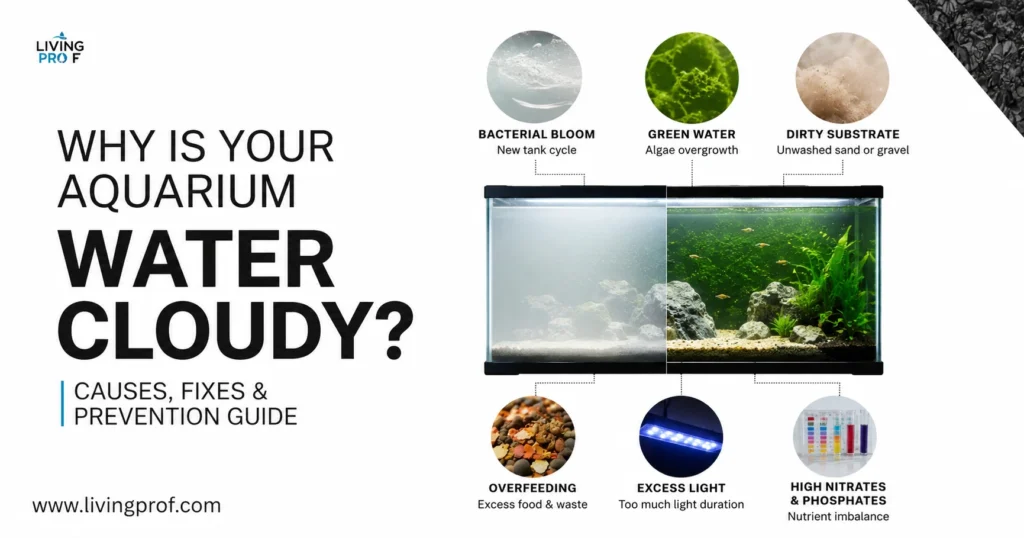
What causes white, milky water in new fish tanks? In brand new setups, a milky hazy look usually means a bacterial bloom is happening. Useful heterotrophic bacteria reproduce at massive speeds to consume dissolved organics. These tiny bugs float around in the water column until they settle down on surface area. I remember my first tank looked like a glass of skim milk for three straight days. You do not need to panic because this is a totally normal stage of establishing a healthy biological filter.
Why does green water appear and how do you stop it? Green water is a completely different monster caused by single-celled algae floating in the tank. If your aquarium gets direct sunlight or you leave your light fixture running all day long, algae multiplies like crazy. High levels of nitrates and phosphates fuel this growth rapidly. If you keep high-waste species like big cichlids, check out our guide on how big do Oscar fish get to see how their waste output affects water clarity. Blocking external light and cutting total lighting hours will crush the green bloom fast.
Is bacterial bloom harmful to fish?
Are those floating bacteria going to make your swimming buddies sick? The short answer is no, the bacteria themselves are not toxic parasites. However, the massive spike in cellular activity can drain dissolved oxygen levels out of the water very fast. Fish might start gasping near the surface if oxygen drops too low.
How long does a bacterial bloom actually last? Most milky blooms clear up on their own within two to seven days. You just have to show a little patience and let the biological balance settle down. Adding extra aeration with a reliable pump helps keep oxygen high during this phase. If you need a solid air pump to keep gas exchange strong, browse the options in our roundup of the best aquarium air pumps.
- Oxygen Loss: High bacterial growth consumes water oxygen rapidly.
- Gas Exchange: Increase surface agitation using spray bars or air stones.
- Water Testing: Keep an eye on toxic ammonia and nitrite spikes during blooms.
- Chemical Spikes: Never panic drop random chemical treatments into a blooming tank.
If you are keeping delicate species like Discus fish, maintaining strict control over water parameters is vital during any cloudiness event.
How do you fix cloudy water from new substrate?
Did you pour fresh gravel or sand into your tank and watch it instantly turn into a mud pit? This is super common when starting a setup for sensitive reptiles or fish. Fine dust particles from substrate float effortlessly in the water column if they are not cleaned beforehand.
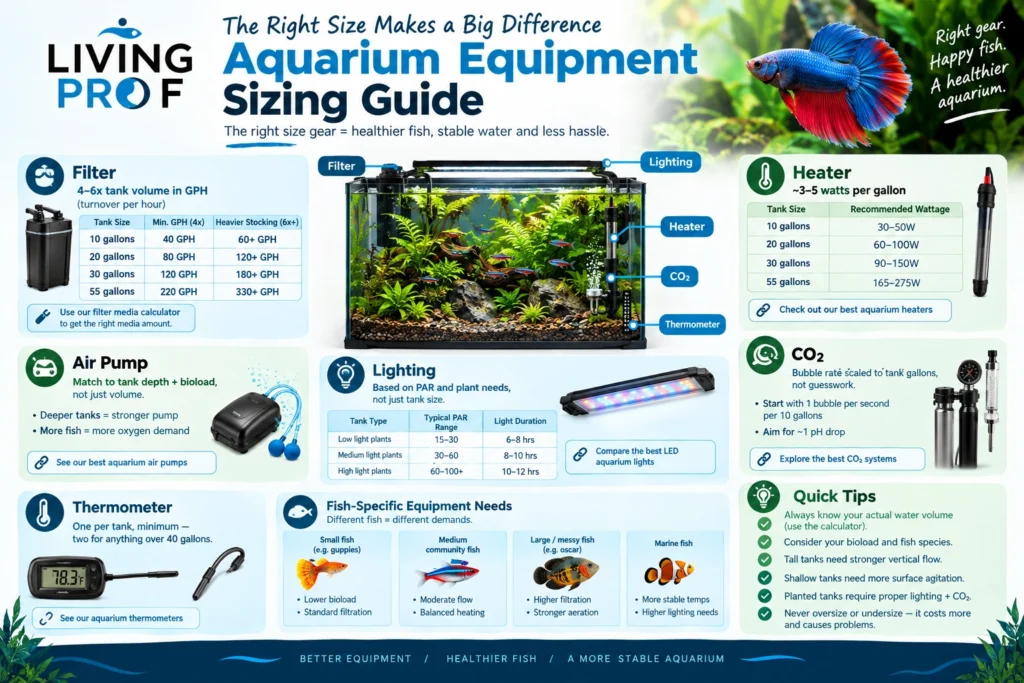
Why is sand rinsing so important before adding water? Unwashed sand contains tiny silt particles that sit suspended in the water for days. Rinsing substrate in a bucket until the drain water runs clear saves you massive headaches later. If you already dumped unwashed gravel in, your mechanical filter media has to do all the heavy lifting. You can plug your tank dimensions into our fish tank volume calculator to estimate your precise water capacity for properly sizing your filtration unit.
+-----------------------------------------------------------------------+
|                       SUBSTRATE CLEANING STEPS                        |
+-----------------------------------------------------------------------+
| 1. Dump raw gravel/sand into a clean 5-gallon bucket.                 |
| 2. Run cold tap water into the bucket while stirring vigorously.      |
| 3. Tilt bucket to pour off dusty, cloudy wastewater.                  |
| 4. Repeat rinsing process 5 to 10 times until water stays clear.       |
| 5. Carefully scoop washed substrate into your empty glass tank.       |
+-----------------------------------------------------------------------+
When building setups for creatures like Leopard geckos or semi-aquatic pets, keeping dust down prevents eye and respiratory issues too.
Does overfeeding cause cloudy fish tank water?
Are you accidentally dumping way too many flakes into the tank every morning? Leftover food is one of the biggest drivers behind persistent haze in mature aquariums. Unconsumed flakes dissolve quickly, releasing organic waste that feeds nuisance bacteria and algae.
How much waste accumulates from leftover fish food? Excess food rots fast on the tank floor, spiking ammonia levels and destroying clarity. A single pinch of uneaten pellets can cloud a small ten-gallon tank within hours. If you struggle to feed accurate amounts while away at work, using an automatic fish feeder can prevent overfeeding mistakes completely.
- Feed Small Portions: Only give what fish can consume within two minutes.
- Remove Leftovers: Vacuum out uneaten bits using a siphon siphon immediately.
- Target Feeding: Feed bottom dwellers like Corydoras catfish sinking pellets directly so top fish do not waste food.
- Skip Days: Fasting adult fish one day per week helps clean out their digestive system.
Proper feeding habits are crucial whether you are keeping simple Guppy fish or managing a delicate setup with peaceful tankmates from our best freshwater community fish combinations guide.
How to clear cloudy aquarium water fast?
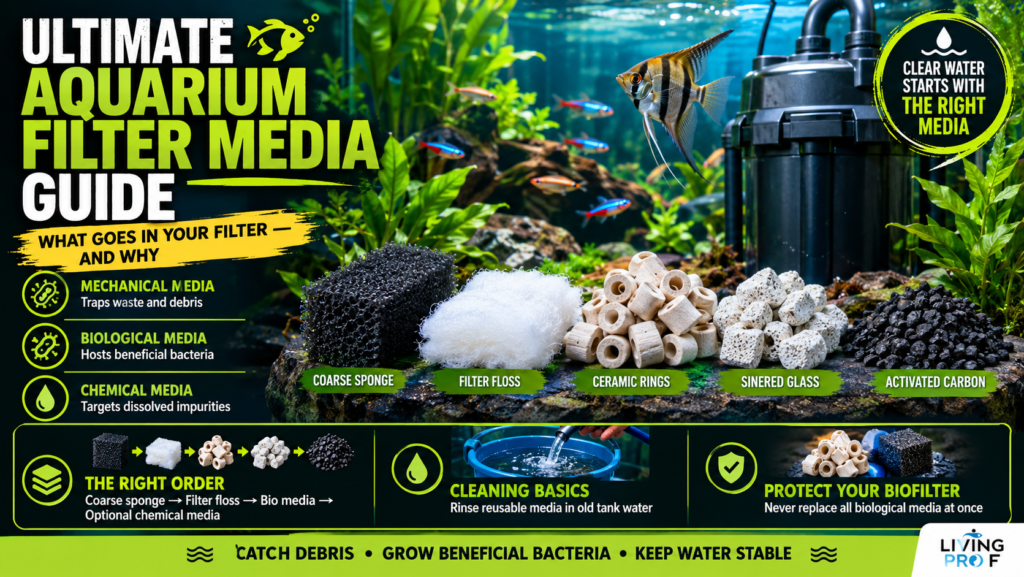
What are the absolute fastest ways to strip particles out of your water? When you want crystal clear water by tonight, relying on proper mechanical filtration media works wonders. Standard filter sponges often miss micro-particles that cause faint haziness.
Which filter media removes fine particles best? Adding dense synthetic filter floss or polishing pads traps microscopic dust instantly. Place these pads right in the water flow path inside your filter box. If you are looking to upgrade your entire filtration setup, take a look at our review of the 10 best aquarium filters. You can also use our filter media calculator to figure out the right amount of media for your system.
+------------------+----------------------------------+------------------------+
| Filter Media     | Particle Trapping Ability        | Primary Purpose        |
+------------------+----------------------------------+------------------------+
| Coarse Sponge    | Large debris (leaves, uneaten food) | Biological / Rough Mech |
| Filter Floss     | Micro-particles & fine dust      | Polishing water clear  |
| Activated Carbon | Dissolved organics & odors       | Chemical clarity       |
+------------------+----------------------------------+------------------------+
When should you use water clarifiers? Chemical flocculants clump tiny floating debris into larger chunks so your filter pad catches them easily. Use these sparingly IMO because they only fix symptoms, not the root waste problem.
Can poor lighting trigger algae blooms?
Why did your water turn a nasty shade of soup green after buying new lights? Excessive lighting is the main cause of free-floating algae outbreaks. High light intensity combined with excess nutrients creates ideal conditions for algae to explode in numbers.
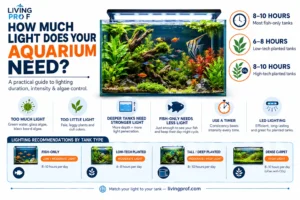
How many hours should aquarium lights stay on? Aquarium lights should generally run for six to eight hours per day maximum. Leaving fixture lights on for twelve hours straight is asking for an algae catastrophe. If you want to customize your photoperiod properly, check out our guide on the best LED aquarium lights or use our handy aquarium lighting calculator to dial in optimal light levels.
                        LIGHTING DURATION vs ALGAE RISK

  Hours/Day  [==================================================]

   4-6 hrs   | Low Algae Risk   (Best for dark tanks / low light plants)
   6-8 hrs   | Ideal Balance    (Healthy plant growth, clear water)
   8-10+ hrs | High Algae Risk  (Green water blooms, thick glass algae)
If you manage high-tech planted aquariums with heavy lighting, balancing nutrients using the best CO2 systems keeps live plants healthy so they outcompete floating algae.
How does proper maintenance keep tank water clear?
Can simple routine maintenance habits guarantee long term water clarity? Absolutely. Skipping water changes lets organic wastes pile up until the biological cycle collapses under pressure. A simple weekly routine prevents cloudy water from ever returning.
How often should you do partial water changes? Performing a 20% to 25% water change every week removes excess nitrates and dissolved organic compounds. Never drain all the water at once because wiping out good bacteria crashes your biological balance. If you are caring for solitary pets like a prized specimen in a Betta fish care guide, consistent small water changes are much safer than massive infrequent cleanings.
- Weekly Water Swaps: Replace 20% of tank volume with conditioned tap water.
- Gravel Siphoning: Vacuum the substrate to pull out rotting debris.
- Equipment Checks: Monitor water temps with accurate aquarium thermometers to prevent bacterial spikes caused by heater failures.
- Heater Maintenance: Inspect heating elements routinely using our guide on 7 best aquarium heaters.
For keepers who care for coldwater species or unique exotics, check out our insights on coldwater subtropical aquarium fish to understand how lower temperatures affect water clarity and bacteria growth rates.
Frequently Asked Questions
Why is my aquarium water cloudy after a water change?
Cloudiness after a water change usually happens when fresh water disturbs dusty substrate or stirs up trapped waste from gravel. It can also happen if temperature differences trigger a mild bacterial bloom. The haze usually clears up within a few hours once your filter catches floating particles.
Will cloudy water kill my fish?
Cloudy water caused by dust or mild bacterial blooms is not directly toxic to fish. However, intense bacterial blooms can reduce dissolved oxygen levels in the water. Keep an eye on your fish to ensure they are not gasping at the surface.
Should I change the water if it gets cloudy?
Do not perform massive water changes for milky white bacterial blooms in new tanks, as this resets the biological cycle and prolongs the fog. For green water or cloudiness caused by overfeeding, doing a 25% water change helps remove excess nutrients and restores clarity faster.
How do I clear green aquarium water?
Turn off your tank lights for three to four days to block light access. Perform partial water changes to lower nutrient levels and consider using a UV sterilizer to destroy free-floating algae cells quickly.
Want to double-check your setup setup capacity and make sure your equipment matches your tank size? Explore our complete tank capacity and equipment guide to optimize your filtration and keep your aquarium running crystal clear year-round!