Key Takeaways
Tuataras are not lizards. They belong to the ancient order Rhynchocephalia.
They split from other reptiles over 200 million years ago.
They have a parietal “third” eye that detects light.
They grow slowly and can live 100+ years.
Their DNA helps scientists understand early reptile evolution.
If we lose them, we lose a living reference point for reptile science.
What Exactly Is a Tuatara (And Why Do People Get It Wrong)?
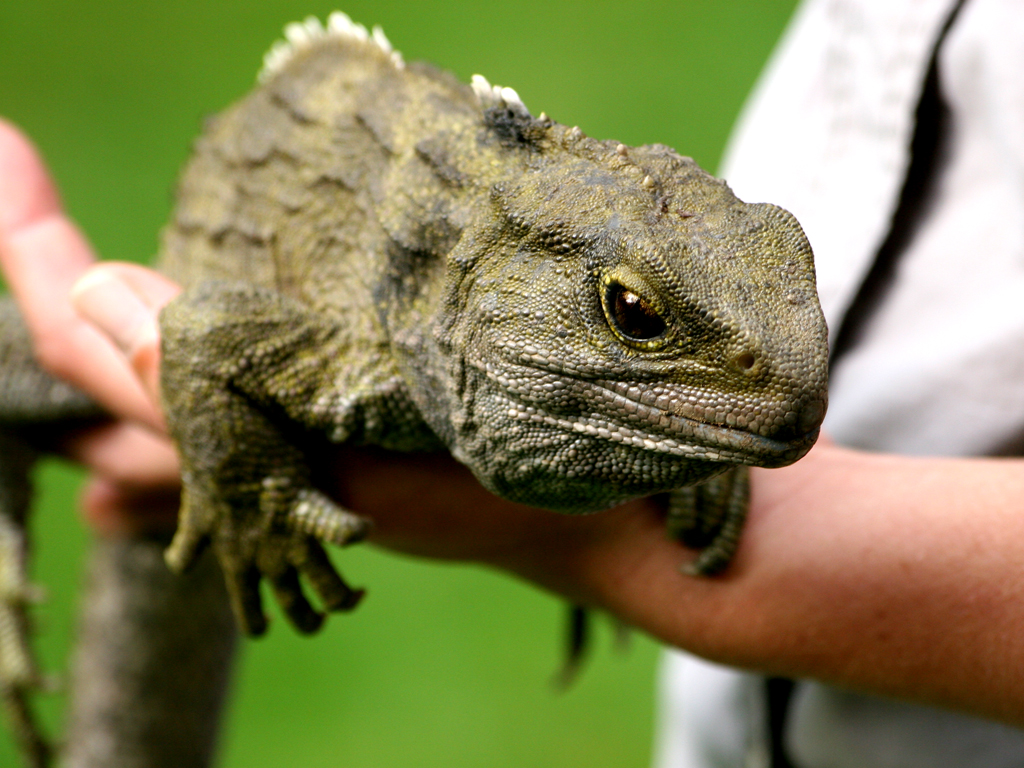
Most people look at a tuatara and say, “Oh cool, a lizard.”
And I kinda wince every time, not gonna lie.
A tuatara belongs to the order Rhynchocephalia, not Squamata like lizards and snakes. That split happened over 200 million years ago. That’s before modern lizards even started sorting themselves out. So no, it’s not just a “weird lizard.” It’s its own thing entirely.
I remember the first time I studied one closely. The skull structure stopped me in my tracks. Tuataras have:
Two rows of teeth in the upper jaw
One row in the lower jaw
A rigid skull with limited flexibility
Lizards don’t do that. Their jaws move differently. Their skull bones arrange differently. The differences look subtle at first, but once you see them, you can’t unsee them.
Why does this matter? Because classification shapes research. If scientists lumped tuataras with lizards, we would miss critical evolutionary signals. And trust me, that would be a mess.
Why Scientists Call Tuataras Living Fossils
The phrase “living fossil” gets thrown around a lot. Sometimes people use it lazily. But with tuataras, it actually fits.
Their body plan stayed remarkably stable for millions of years. Fossils from the Mesozoic era show reptiles that look shockingly similar. That continuity gives scientists something rare: a direct comparison between ancient reptiles and a modern survivor.
Now here’s the weird part.
Their body looks ancient.
But their genome? It’s complex and dynamic.
So they aren’t “frozen in time.” They evolved. They adapted. They survived extinction events. But their structural blueprint held steady.
Ever wondered what reptile life looked like before snakes and geckos dominated ecosystems? Tuataras give us a living preview. And yeah, that’s kind of wild.
The Third Eye Thing — Yes, It’s Real
You’ve probably heard the “third eye” story and thought it sounded exaggerated. It’s not.
Tuataras have a parietal eye on the top of their head. In hatchlings, you can actually see it. It later gets covered by scales as they age.
This eye doesn’t form images. It detects light and dark. It helps regulate:
Circadian rhythm
Seasonal behavior
Hormone cycles
Why does that matter? Because it gives researchers insight into how early reptiles regulated biological clocks before complex endocrine systems evolved.
When I first read about it, I thought it sounded sci-fi. But once you look at reptile neurobiology, it makes perfect sense. Simple light detection influences survival. Simple systems often come first in evolution.
Nature doesn’t overcomplicate things unless it has to. IMO, that’s one of the coolest lessons here.
Slow Growth, Long Life — What That Tells Us About Reptile Biology
Tuataras grow painfully slow. And I mean painfully.
They reach sexual maturity around 10–20 years old. They can live over 100 years. Some estimates push even further.
Their metabolism runs slower than most reptiles. They tolerate cooler temperatures better than many species. That makes them perfect subjects for studying:
Longevity in reptiles
Metabolic adaptation
Temperature-driven development
Scientists also study their temperature-dependent sex determination. Warmer nests tend to produce more males. Climate change now threatens that balance. You shift temperature slightly, and suddenly the population skews heavily male. That’s not a small issue.
Slow life history strategies tell us something critical: not all reptiles operate on fast reproduction cycles. Tuataras represent a different survival model entirely.
Tuatara DNA — Why Geneticists Get Excited
Okay, this part gets nerdy fast, but stick with me.
The tuatara genome surprised scientists. It shows a mix of reptilian and bird-like features. It carries ancient transposable elements. It reveals evolutionary branching points that help clarify amniote evolution.
Why do researchers care so much?
Because when you compare tuatara DNA to:
Lizards
Snakes
Crocodilians
Birds
You can trace divergence patterns more accurately. You can see which traits evolved early and which appeared later.
It’s like having a reference edition of reptile history still walking around. That doesn’t happen often in biology.
And no, this isn’t abstract academic stuff. It directly shapes how we understand vertebrate evolution today.
Conservation Isn’t Just About Saving a Species
Tuataras live only in New Zealand, mostly on predator-free offshore islands.
Rats nearly wiped them out. Habitat restriction made them vulnerable. Conservation programs relocated populations and managed breeding carefully.
Here’s the blunt truth:
If tuataras disappear, we lose a scientific anchor.
We lose:
A baseline for reptile evolution
A model for ancient skull mechanics
A key genome for comparative studies
Climate change adds new pressure. Rising temperatures affect sex ratios. Scientists now monitor nesting conditions closely.
Conservation here supports research directly. It’s not symbolic. It’s practical.
What Tuataras Teach Modern Reptile Science (And Why You Should Care)
So why should you care about one odd reptile sitting on a New Zealand island?
Because tuataras bridge time.
They show how early reptiles structured their bodies.
They reveal how genomes shift while anatomy stabilizes.
They demonstrate how environmental temperature shapes biology.
Ever wonder how we piece together evolutionary puzzles without living examples? Usually, we can’t. Tuataras give us one.
I’ve studied reptiles for years, and honestly, tuataras still surprise me. They force scientists to rethink assumptions. They keep evolutionary theory grounded in actual organisms.
And that’s rare.
Frequently Asked Questions
Are tuataras dinosaurs?
No. They share ancient ancestry with early reptiles, but they are not dinosaurs.
Can you keep a tuatara as a pet?
No. They are protected species in New Zealand. Strict laws prevent private ownership.
Why do tuataras live only in New Zealand?
New Zealand’s isolation protected them from competition and predators that wiped out their relatives elsewhere.
How long do tuataras live?
Many live over 100 years, making them one of the longest-living reptiles.
What makes their genome unusual?
Their genome contains ancient genetic elements and unique structures that help scientists trace reptile evolution more accurately.
Tuataras look simple. They act quiet. They move slow.
But they hold 200 million years of evolutionary history in one compact body. And that’s kinda incredible, if you ask me