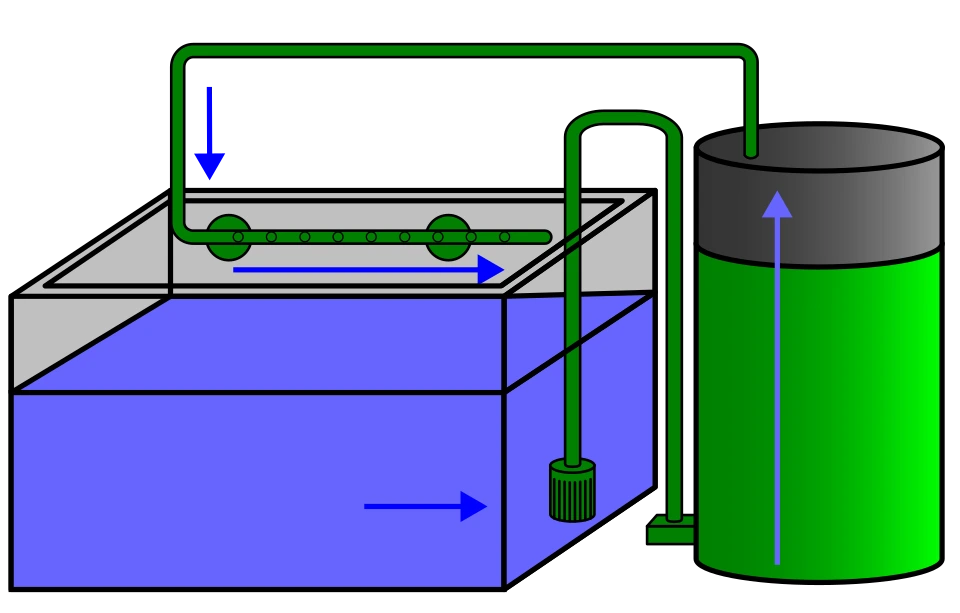
The One Rule Everyone Gets Wrong
Here’s the thing about aquarium filters — most people buy whatever the pet shop recommends for their tank size and assume that’s fine. And then six months later they’re dealing with cloudy water, ammonia spikes, and sick fish, wondering what went wrong.
The problem is that “tank size” alone doesn’t tell you what filter you need. The fish you keep, how heavily you stock, what you feed, and even your substrate all affect how hard your filter has to work. A 100 litre tank with three small tetras needs very different filtration to a 100 litre tank with a pair of oscar fish — actually, oscars in 100 litres is a whole separate problem, but you get the point.
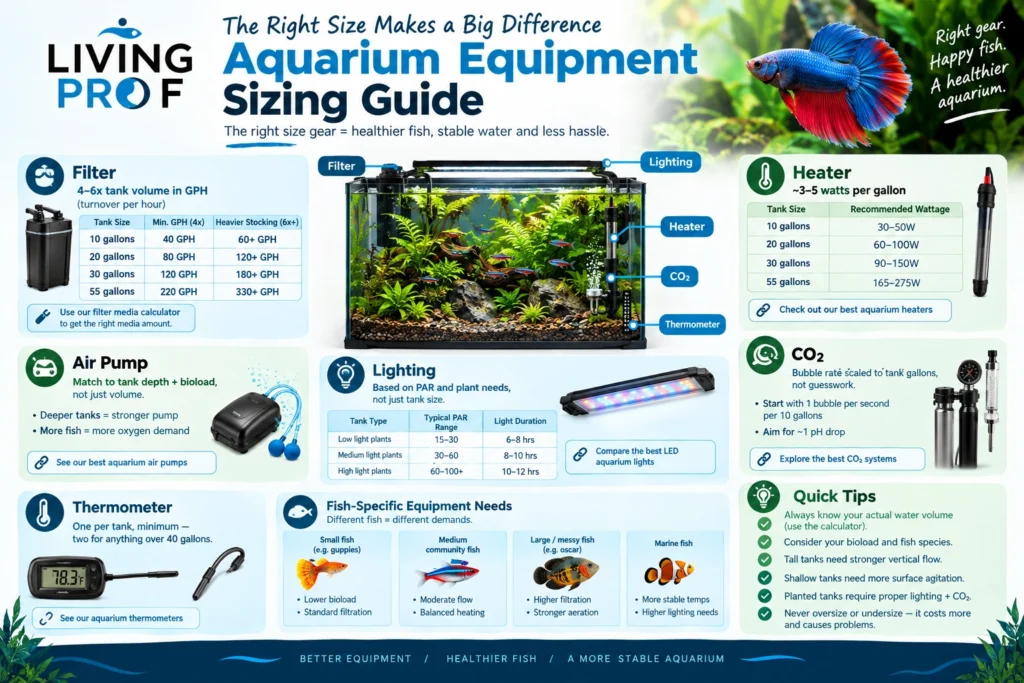
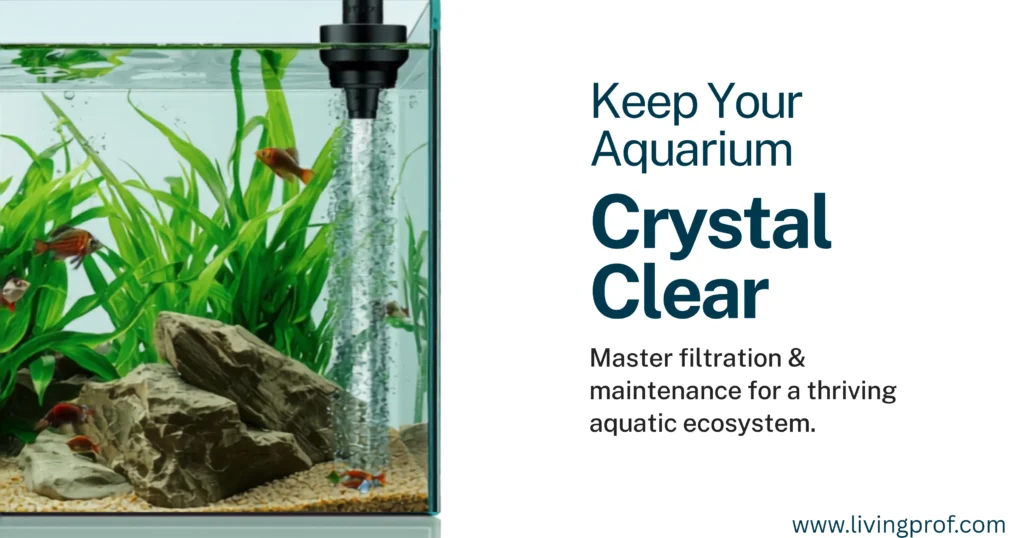
The standard starting rule is this: your filter should turn over the full tank volume at least 4 times per hour. So a 150 litre tank needs a filter rated for a minimum of 600 litres per hour (L/H). For messy fish, heavily stocked tanks, or species with high bioloads, push that to 6–8x turnover.
That’s the baseline. Everything else builds from there.
Understanding the Three Types of Filtration
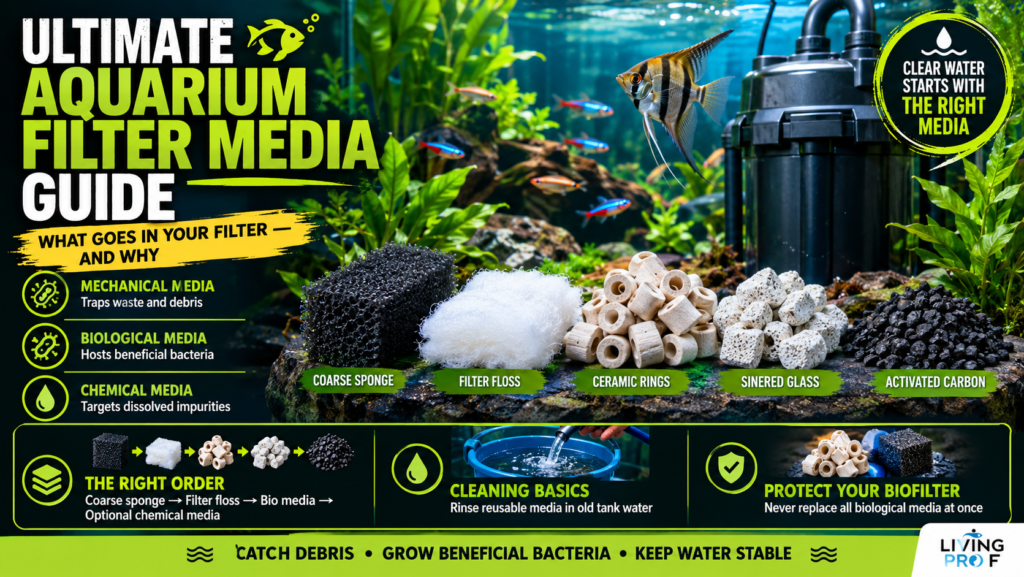
Before you pick a filter size, it helps to understand what filtration actually does — because “bigger flow rate” isn’t the whole story. A filter needs to do three things well, and different filter types handle these differently.
Mechanical Filtration
This is the physical removal of waste particles — uneaten food, fish waste, plant debris. Sponges and filter floss handle this. If your mechanical filtration is inadequate, your water goes cloudy and organic waste breaks down into ammonia faster than your bacteria can process it.
Biological Filtration
This is the most important type. Beneficial bacteria colonise your filter media and convert toxic ammonia → nitrite → nitrate. The more media surface area your filter holds, the more bacteria it can support. This is why a big canister filter with lots of ceramic rings outperforms a small internal filter even if the flow rates are similar.
Chemical Filtration
Activated carbon and similar media remove dissolved organic compounds, medications, and odours. Useful in specific situations — after medication treatment, to clear tannins, or to polish water. Not something you always need running permanently.
| Filtration Type | What It Removes | Media Used |
|---|---|---|
| Mechanical | Particles, debris, waste | Sponge, filter floss, filter wool |
| Biological | Ammonia, nitrite (via bacteria) | Ceramic rings, bio-balls, sponge |
| Chemical | Dissolved organics, chemicals, odours | Activated carbon, zeolite |
A good filter handles all three. Cheaper internal filters often skimp on biological media capacity — which is exactly why they struggle in stocked tanks even when the flow rate looks fine on paper.
How to Calculate the Filter Size You Actually Need
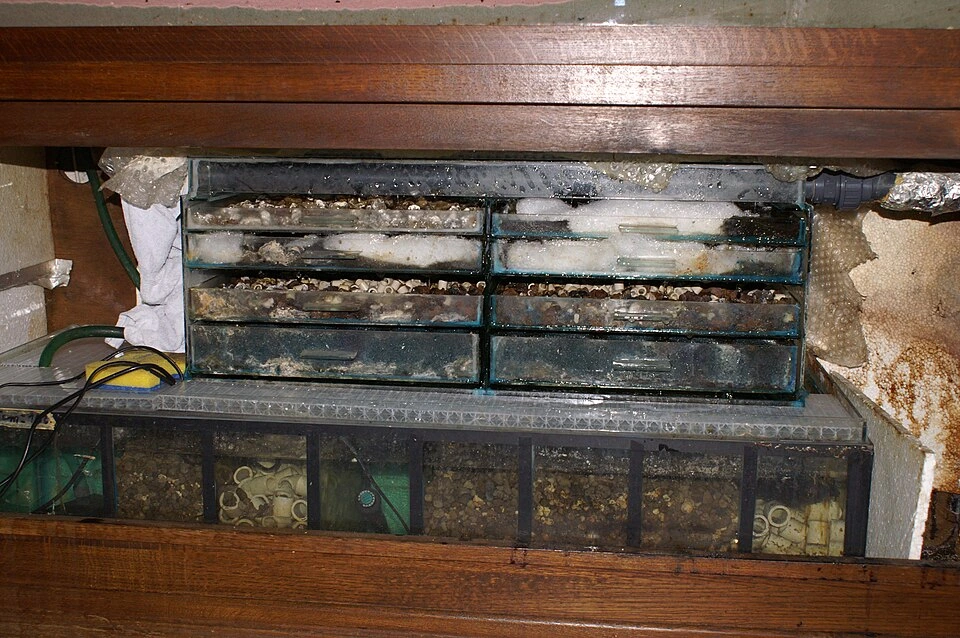
Right, let’s get into the actual numbers. The formula is simple:
Minimum filter flow rate (L/H) = Tank volume (litres) × 4
Recommended flow rate (L/H) = Tank volume (litres) × 6
Use the fish tank volume calculator to get your accurate tank volume first — don’t guess, and don’t trust the number on the box without verifying it.
Quick Reference Table
| Tank Volume | Minimum Flow Rate | Recommended Flow Rate | High Bioload Flow Rate |
|---|---|---|---|
| 40 litres | 160 L/H | 240 L/H | 320 L/H |
| 80 litres | 320 L/H | 480 L/H | 640 L/H |
| 120 litres | 480 L/H | 720 L/H | 960 L/H |
| 200 litres | 800 L/H | 1200 L/H | 1600 L/H |
| 300 litres | 1200 L/H | 1800 L/H | 2400 L/H |
One thing to note — filter manufacturers rate their products under ideal conditions (clean media, no head pressure, perfect plumbing). In a real setup, actual flow is usually 20–30% lower than the stated rating. So if you need 600 L/H, buy a filter rated for 750–800 L/H. This is a mistake I made with my first canister filter and I paid for it with months of mediocre water quality before I figured out why.
Also use the filter media calculator to work out exactly how much biological media your filter needs to handle your specific bioload — flow rate and media volume work together, and one without the other doesn’t give you the full picture.
How Your Fish Choice Affects Filter Sizing
This is where a lot of generic filter sizing advice falls apart. The “4x turnover” rule assumes an averagely stocked tank with average fish. Reality is messier than that — pun intended.
High Bioload Fish (Need 6–8x Turnover)
These fish produce a lot of waste relative to their size, or they eat heavily, or both:
- Oscars — massive waste producers, need serious filtration. Check the full oscar fish care guide for setup requirements
- Goldfish — notoriously dirty, always need more filtration than people expect
- Discus — high bioload AND sensitive to water quality, a challenging combination. Discus tank requirements cover this in detail
- Large cichlids — territorial, eat a lot, produce a lot
- Monster fish — giant aquarium fish of any kind demand heavy-duty filtration
Medium Bioload Fish (4–6x Turnover)
Your typical community tank fish:
- Angelfish — moderate waste producers, fairly forgiving
- Corydoras catfish — relatively clean but kept in groups
- Guppies — small but breed fast, so population can grow quickly
- Most tetras, rasboras, and barbs
Low Bioload / Flow-Sensitive Fish (4x Max, Sometimes Less)
- Betta fish — hate strong current. A betta fish in a tank with too much flow will be stressed and fin-damaged constantly. Aim for 4x max and use a spray bar or sponge pre-filter to diffuse the output
- Some rare freshwater species — tropical and rare freshwater fish often come from slow-moving water and need gentle filtration
Filter Types and Which Tanks They Suit
Flow rate matters, but so does the type of filter. Different designs suit different setups, and getting this wrong is almost as bad as getting the size wrong.
Internal Filters
These sit inside the tank, usually in a corner. They’re cheap, easy to maintain, and fine for small or lightly stocked tanks up to about 60–80 litres. The downsides? They take up space inside the tank, they have limited media capacity, and the better ones still don’t match a canister for biological filtration volume. Good for quarantine tanks, fry tanks, or a simple betta setup.
Hang-On-Back (HOB) Filters
These hang on the rim of the tank and pull water up through a siphon tube. They’re great for tanks up to around 200 litres, easy to access for maintenance, and hold decent media volumes. A solid mid-range option for most community setups.
Canister Filters
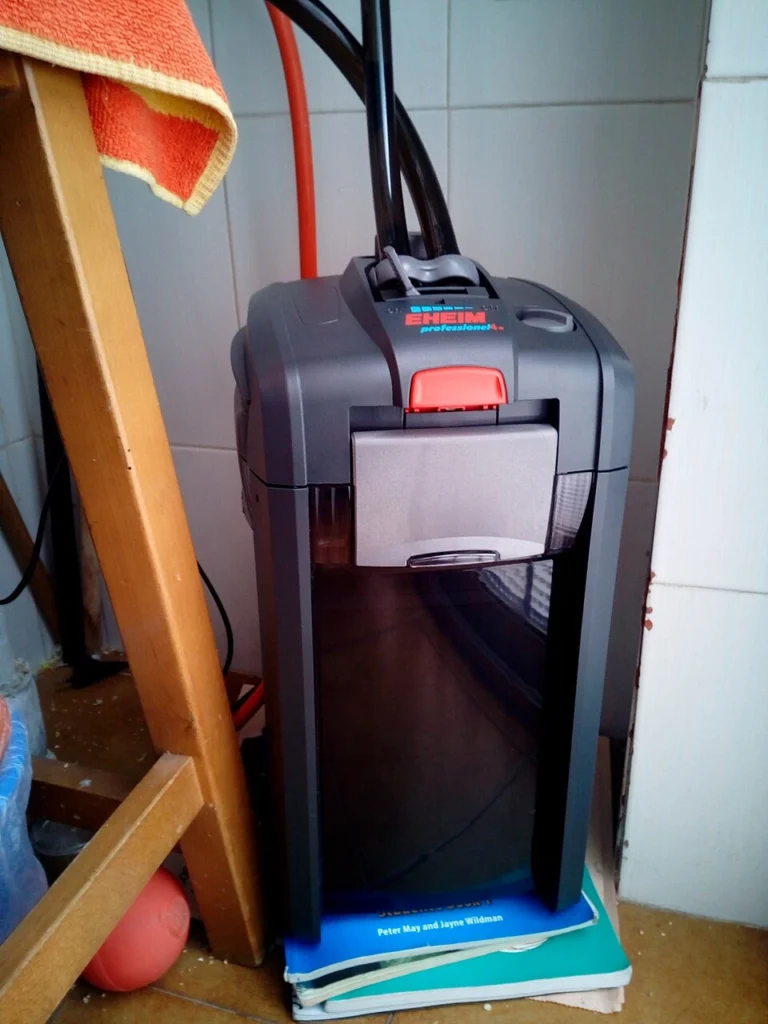
Canisters sit outside the tank (usually in the cabinet below) and push water through a pressurised chamber packed with filter media. They hold far more media than internal or HOB filters, which means more biological filtration capacity. Best choice for tanks over 100 litres, heavily stocked setups, or any fish with high bioloads. The best aquarium filters guide covers the top canister options worth considering.
Sponge Filters
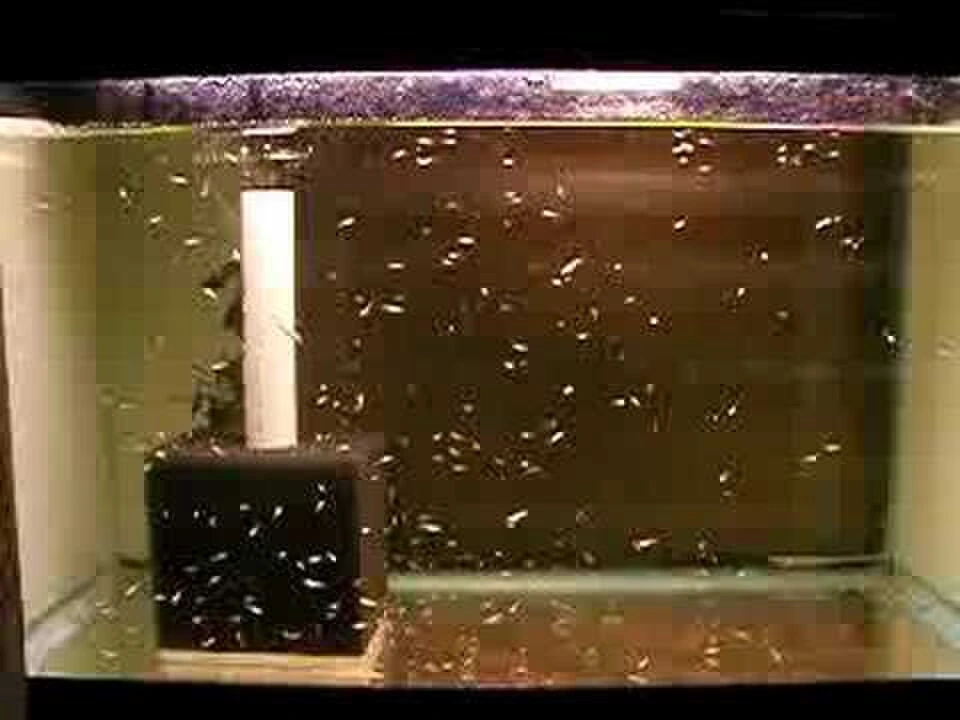
Powered by an air pump, sponge filters are brilliant for breeding tanks, hospital tanks, and fry setups. They provide gentle flow and excellent biological filtration surface. Not ideal as the sole filter in a heavily stocked main display tank, but as a supplementary filter they’re incredibly useful.
| Filter Type | Best Tank Size | Best For | Avoid If |
|---|---|---|---|
| Internal | Under 80L | Small/simple setups | Heavy stocking |
| Hang-on-back | 40–200L | Community tanks | Sumps or cabinet setups |
| Canister | 100L+ | All medium-large tanks | Very small tanks |
| Sponge | Any | Breeding, fry, hospital tanks | High bioload main tanks |
Can You Over-Filter a Tank?
Short answer: not really in terms of filtration capacity — more bacteria is almost always better. But you can create too much water flow, and that’s a genuine problem for certain fish.
Betta fish are the classic example. They come from slow-moving water in Southeast Asia — rice paddies, shallow ponds. Put them in a tank with a powerful canister pushing 6x turnover and they’ll spend all their energy fighting the current, their fins will get shredded, and they’ll be perpetually stressed. Stress leads to disease. IMO this is one of the most common betta husbandry mistakes out there.
The fix is simple though. You can reduce outlet flow by:
- Fitting a spray bar along the back of the tank to diffuse the output
- Adding a sponge pre-filter over the intake (slows flow AND protects small fish)
- Pointing the outlet at the glass wall to break up the current
- Using an adjustable flow canister and dialing it back
For community tanks with a mix of species, aim for gentle surface movement and no strong midwater currents that smaller fish have to constantly swim against. You want circulation, not a river.
Running Two Filters: When and Why It Makes Sense
Running two filters on one tank sounds excessive until you’ve experienced a filter failure at 2am and watched your parameters crash. Then it makes a lot of sense.
There are actually several good reasons to run dual filtration:
- Redundancy — if one filter fails or needs maintenance, the other keeps the cycle going. Your bacteria colony survives on the second filter’s media while you sort out the first
- Higher bioload tanks — two medium filters often outperform one large filter in terms of media volume and flow distribution
- Breeding setups — you can move a mature sponge filter seeded with established bacteria straight into a new tank or breeding setup to instantly cycle it
- Large tanks — anything over 300 litres genuinely benefits from filtration at multiple points in the tank to avoid dead spots
The other thing people don’t think about: never clean both filters at the same time. Clean one, wait two weeks, then clean the other. Cleaning removes the bacteria from the media — doing both at once can crash your cycle even in an established tank.
Pair your filtration setup with a reliable aquarium heater and an aquarium thermometer to monitor conditions — temperature stability and good filtration work together to keep your fish healthy. And if you want to cross-check your whole setup against your tank volume and stocking, the tank capacity and equipment guide gives you everything in one place 🙂
Frequently Asked Questions
What happens if my filter is too small? Ammonia and nitrite build up faster than your bacteria can process them. You’ll see cloudy water, fish gasping at the surface, loss of appetite, and eventually disease or death. It’s a slow problem that sneaks up on you — water can look clear but still have dangerous chemistry.
Is a higher flow rate always better? No. Flow rate needs to match your fish species. Too much current stresses slow-water fish and can physically exhaust small or weak swimmers. Match turnover rate to your stocking, and use a spray bar or deflector to manage output direction.
Do I need to upgrade my filter when I add more fish? Yes, if you’re significantly increasing your bioload. Adding a few small fish to an established tank usually isn’t an issue. Adding large or messy fish to a tank already at capacity is — either upgrade the filter or add a second one.
How often should I clean my filter? Rinse mechanical media (sponge, floss) in tank water — never tap water — every 2–4 weeks depending on how dirty it gets. Biological media needs cleaning far less often, maybe every 2–3 months, and only gently. Over-cleaning biological media destroys your bacterial colony.
Can I use tap water to clean filter media? Never use tap water on biological media. The chlorine kills the beneficial bacteria instantly. Always rinse in water taken from the tank during a water change.
My water looks clear but my fish are sick — could it be the filter? Absolutely. Clear water doesn’t mean clean water. Ammonia and nitrite are invisible. Test your water with a proper liquid test kit — not strips, which are notoriously inaccurate — and check ammonia, nitrite, nitrate, and pH. Poor filtration often shows up in chemistry before it shows up visually. Common freshwater fish diseases are frequently caused or worsened by poor water quality.
What’s the difference between filter flow rate and turnover rate? Flow rate is the raw litres-per-hour the filter moves. Turnover rate is how many times that flow rate processes your total tank volume per hour. A 600 L/H filter on a 150 litre tank = 4x turnover. Same filter on a 300 litre tank = only 2x turnover — not enough.
Do planted tanks need less filtration? Heavily planted tanks do consume some ammonia and nitrate through plant uptake, which helps. But they don’t replace filtration — they supplement it. You still need proper mechanical and biological filtration, especially in the first months before plants are fully established. If you’re running a CO2 system for plant growth, good water circulation from your filter also helps distribute CO2 evenly.
Should I buy the most powerful filter I can afford? Buy the right filter for your setup, not just the most powerful. Oversized flow causes problems for sensitive fish. Oversized media capacity, on the other hand, is always fine — more bacteria never hurts. Focus on getting a filter with good media volume and appropriate flow rate for your specific tank and fish.