Why Filter Media Is the Part Everyone Underestimates
Most fishkeepers spend a lot of time picking the right filter. Then they stuff it with whatever media came in the box, forget about it, and wonder why their water quality is still off six months later. Sound familiar?
The filter is just a box that moves water. The media is what actually does the work — and getting the type and quantity right matters far more than most people realise. Too little biological media and your beneficial bacteria colony can’t keep up with your fish’s waste. Too much coarse mechanical media packed too tight and you’re strangling your flow rate.
I’ve rebuilt filter media setups on tanks that had been running for years and seen immediate improvements in water clarity and chemistry just from sorting out the media configuration. It’s genuinely one of the most impactful things you can do for an established tank, and one of the most overlooked.
The good news is that once you understand what each type of media does and roughly how much you need, it becomes pretty straightforward. The filter media calculator takes the guesswork out entirely — but understanding the logic behind it is what turns you from someone who keeps fish into someone who actually understands their tank.
The Three Types of Filter Media (And What Each One Does)
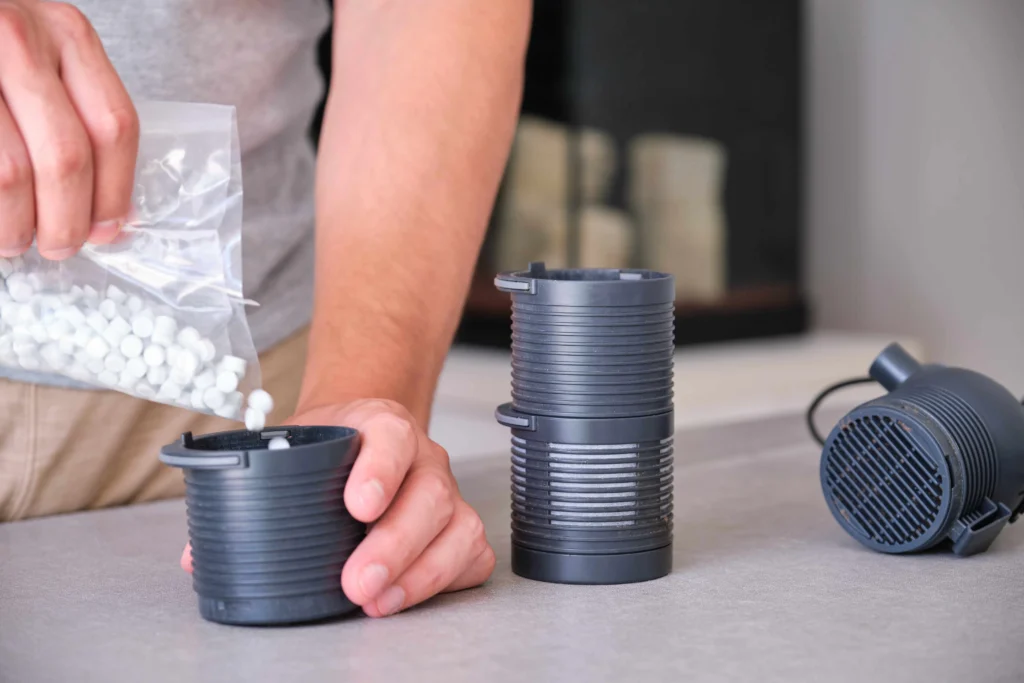
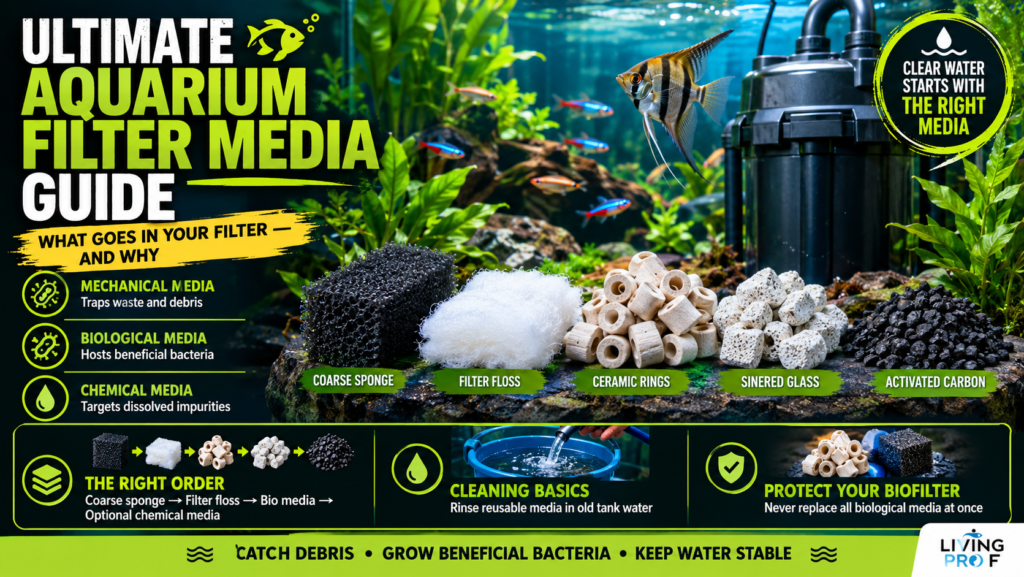
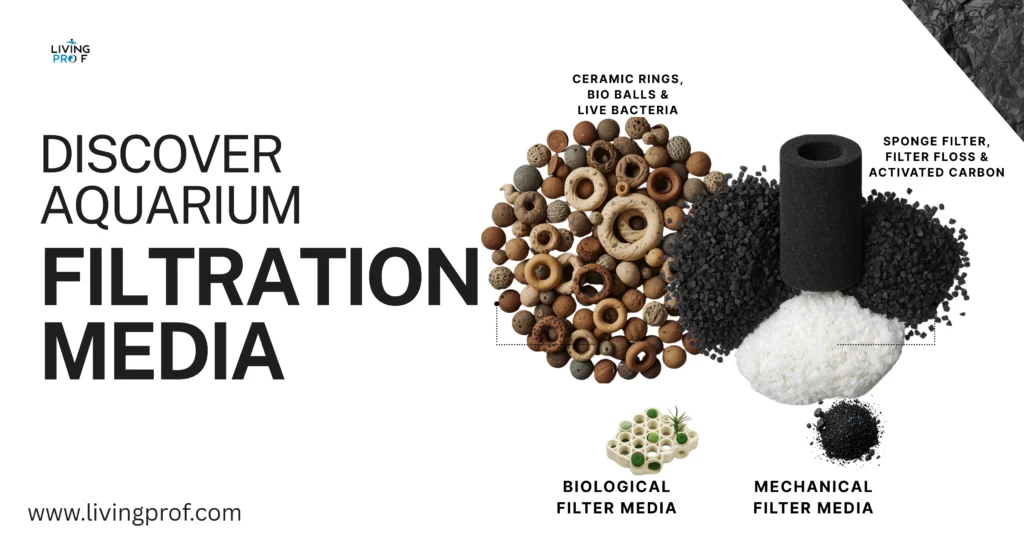
Before calculating quantities, you need to know what you’re actually working with. Filter media splits into three categories, and each one does a completely different job.
Mechanical Media
Mechanical media physically traps solid particles — fish waste, uneaten food, plant debris, anything that floats around in the water column. It comes in different grades:
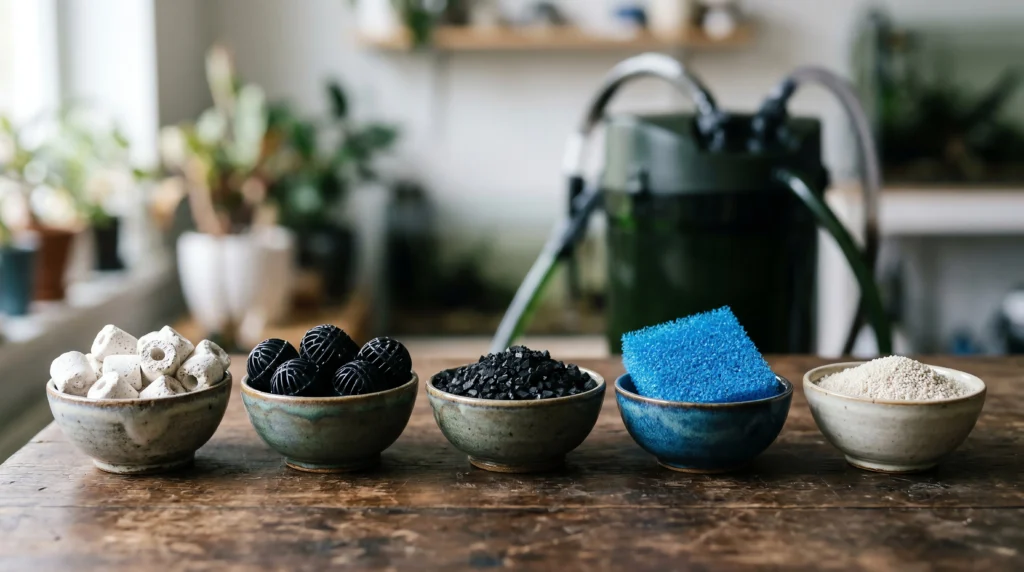
- Coarse sponge — catches larger particles, goes first in the filter flow
- Medium sponge — catches mid-sized particles
- Fine sponge or filter floss — polishes the water, catches fine particles before water reaches biological media
The order matters. Coarse always comes before fine. If you put fine media first, it clogs within days and your flow rate drops off a cliff.
Biological Media
This is the most important media in your filter. Beneficial bacteria (Nitrosomonas and Nitrobacter) colonise the surface of biological media and convert toxic ammonia into nitrite, then nitrite into the far less harmful nitrate. The more surface area your bio media has, the more bacteria it can support.
Common types include:
- Ceramic rings — classic, widely available, decent surface area
- Sintered glass (e.g. Seachem Matrix) — far higher surface area than ceramic, more bacteria per litre
- Lava rock — cheap, porous, surprisingly effective
- Bio-balls — good for high-flow wet/dry filters, less effective in standard canister setups
- Sponge — doubles as both mechanical and biological media
Chemical Media
Chemical media removes dissolved compounds that mechanical and biological filtration can’t touch — things like tannins, medications, and dissolved organics that cause yellow-tinted water.
- Activated carbon — the most common, removes odours, tannins, medications
- Zeolite — removes ammonia directly, useful in new tanks or hospital setups
- Phosphate removers — for tanks struggling with algae from high phosphate levels
Chemical media isn’t something you always need running permanently. Carbon, for example, removes medications from the water — so if you’re treating freshwater fish disease, pull the carbon out first or you’re wasting your treatment.
| Media Type | Job | Replace How Often? |
|---|---|---|
| Coarse sponge | Traps large particles | Rinse monthly, replace every 1–2 years |
| Fine sponge / floss | Polishes water | Rinse every 2–4 weeks, replace every 3–6 months |
| Ceramic rings | Houses beneficial bacteria | Never fully replace — rinse gently when needed |
| Sintered glass | Houses beneficial bacteria | Never fully replace |
| Activated carbon | Removes dissolved organics | Replace every 3–4 weeks |
| Zeolite | Removes ammonia | Replace every 2–4 weeks |
How Much Biological Media Do You Actually Need?
Right, let’s get to the numbers. The most common question is always about biological media — because that’s what determines whether your tank stays cycled and your fish stay healthy.
The general rule most experienced fishkeepers use: 1 litre of high-quality biological media per 50 litres of tank water, for a moderately stocked tank with average fish. That’s your baseline.
But it shifts significantly based on your stocking:
Low Bioload Tanks
Lightly stocked tanks with small, clean fish — a few guppies, some neon tetras, a betta — can get away with the baseline or even slightly under. These fish don’t produce much waste and a modest bacterial colony handles them fine.
Medium Bioload Tanks
Community tanks with a mix of tetras, corydoras, angelfish, and similar species sit comfortably at the 1L per 50L rule. Stick to it and you’ll be fine.
High Bioload Tanks
This is where the baseline falls short. Oscar fish, large cichlids, discus, goldfish, and monster fish produce significantly more waste than their size might suggest. For these tanks, push your biological media to 1 litre per 25–30 litres of tank water — or double up with a second filter to add more media capacity.
Quick Reference
| Bioload Level | Bio Media per Tank Volume | Example Fish |
|---|---|---|
| Low | 1L per 60–70L | Betta, neon tetras, small rasboras |
| Medium | 1L per 50L | Angelfish, corydoras, community mix |
| High | 1L per 25–30L | Oscars, discus, goldfish, large cichlids |
| Very High | 1L per 15–20L | Monster fish, heavily overstocked tanks |
Use the filter media calculator to plug in your specific numbers — it accounts for tank volume, stocking level, and filter type to give you a precise recommendation rather than a rough estimate.
How Much Mechanical Media Do You Need?
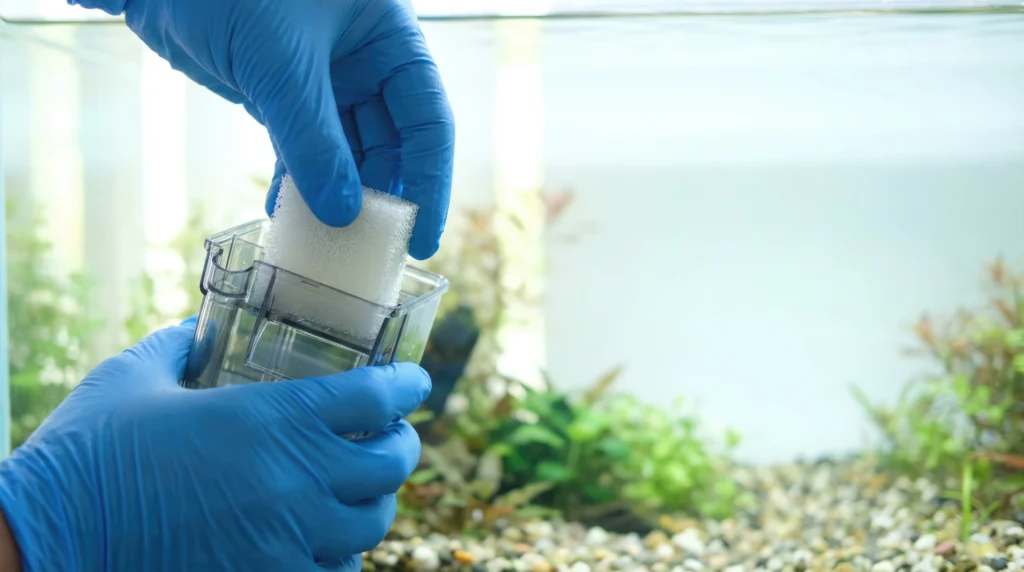
Mechanical media sizing is less about strict ratios and more about filter configuration. The goal is to have enough mechanical filtration to catch particles before they reach your biological media, without creating so much flow restriction that your pump struggles.
Here’s a practical layout for a canister filter, which is what most serious fishkeepers use:
Recommended canister media order (bottom to top, inlet to outlet):
- Coarse sponge — 30–40% of your filter volume
- Medium sponge — 15–20% of your filter volume
- Biological media — 40–50% of your filter volume
- Fine floss or polishing pad — thin layer at the top (outlet side)
- Chemical media — optional, placed after bio media if needed
The coarse sponge does the heavy lifting on mechanical filtration and protects your bio media from clogging up with debris. Rinse it every 2–4 weeks in old tank water — never tap water — and it’ll last years.
One thing I learned the hard way: don’t pack mechanical media too tightly. A filter stuffed with sponge will drop its flow rate significantly within a week of use. Leave a little room. Your filter is trying to move water, not squeeze through a brick wall.
If you run a hang-on-back filter, the same principles apply — coarse mechanical first, then bio media, then fine polishing if the filter has the space for it. Most HOB filters have limited media space compared to canisters, so prioritise biological media if you have to choose.
Media Quantity Based on Your Filter Type
Different filter types hold different amounts of media, and this affects how you calculate what you need. Here’s how it breaks down:
Internal Filters
Internal filters have the smallest media capacity of any filter type. They’re generally fine for tanks under 60–80 litres with light stocking, but they struggle to hold enough biological media for heavier setups. If you’re running an internal filter on a stocked community tank over 100 litres, you’ll likely want to supplement with a sponge filter running off an air pump — sponge filters add biological capacity without adding flow stress.
Hang-On-Back Filters
HOB filters hold moderate amounts of media and work well for tanks up to 150–200 litres. Most come with proprietary cartridges that are expensive and wasteful — the better approach is to fill the media chamber with your own ceramic rings and sponge. You get more media surface area and far better value.
Canister Filters
Canisters give you the most media flexibility. A good canister on a 200 litre tank might hold 3–4 litres of media total — split this roughly 40% mechanical, 50% biological, 10% chemical (if needed). Check the best aquarium filters guide for canister options that give you the most media capacity for your tank size.
Sponge Filters
Sponge filters work as both mechanical and biological media in one. They’re brilliant as supplementary filters, in breeding setups, or in breeding tank companion setups where gentle flow is important. For a main filter on a heavily stocked tank, they don’t hold enough media on their own.
The Biggest Mistakes People Make With Filter Media
I’ve seen (and made) most of these at some point, so consider this a shortcut through the school of hard knocks:
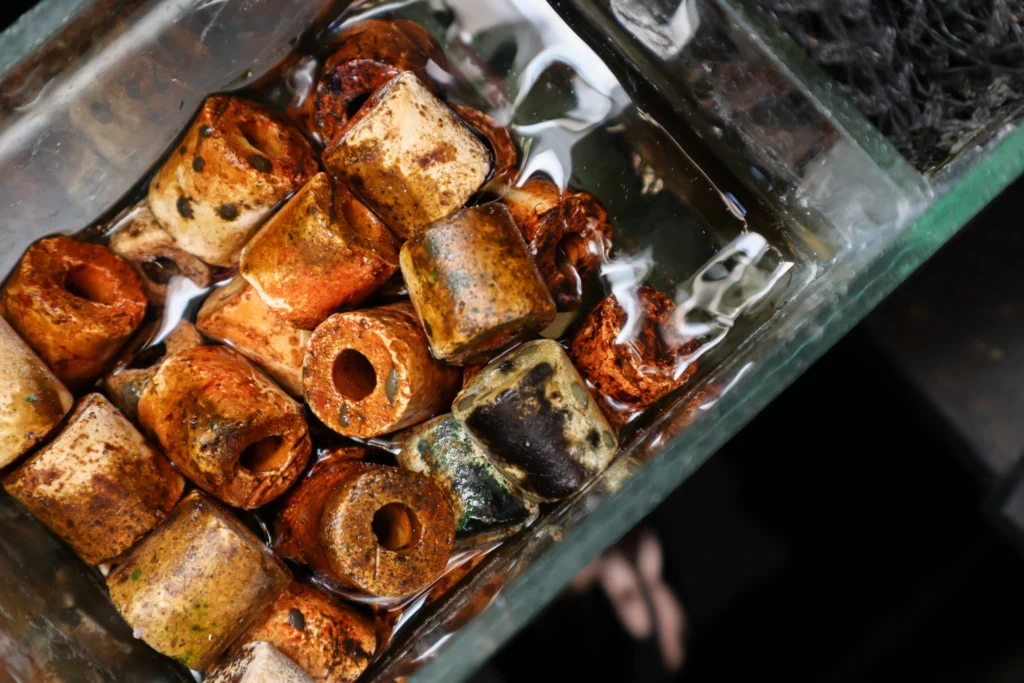
1. Replacing biological media when it looks “dirty” Dirty-looking biological media is working media. The brown coating on your ceramic rings IS your bacterial colony. Replacing it sets your cycle back weeks. Only replace bio media when it physically falls apart.
2. Cleaning all media at the same time If you rinse your sponge, clean your ceramic rings, and replace your carbon all in one session, you’ve essentially crashed your filter. Your bacteria colony drops dramatically and your tank mini-cycles. Clean one section, wait 2–3 weeks, then clean the next.
3. Using tap water to rinse media Tap water contains chlorine. Chlorine kills beneficial bacteria. Always rinse filter media in water taken straight from your tank during a water change. This is non-negotiable.
4. Packing the filter too full Flow restriction is a real problem. A filter crammed with media can’t move enough water, which means less oxygen reaching your bacteria and less filtration happening overall. Check your aquarium filter flow rate after any media change — if it’s noticeably weaker, you’ve packed it too tight.
5. Running carbon permanently Activated carbon has a lifespan of about 3–4 weeks before it saturates and can’t absorb any more. After that it just takes up space. Worse — spent carbon can leach compounds back into the water. Replace it on schedule or skip it unless you have a specific reason to run it.
6. Ignoring the order of media Fine before coarse is a surprisingly common setup mistake. The result is that fine media clogs almost immediately. Always run coarse mechanical media first in the flow path.
Putting It All Together: A Simple Setup Workflow
Here’s a straightforward process for setting up or overhauling your filter media correctly:
- Calculate your tank volume — use the fish tank volume calculator if you’re not sure
- Assess your bioload — light, medium, or heavy stocking? Which fish? Check the relevant species guides for bioload info
- Run the numbers — use the filter media calculator to get specific media quantities for your setup
- Choose your media types — sintered glass or quality ceramic for bio, layered sponge for mechanical, carbon only if needed
- Set up the correct order — coarse → medium → biological → fine → chemical (if used)
- Don’t clean everything at once — stagger any maintenance across weeks, always use tank water
- Monitor parameters — test ammonia, nitrite, and nitrate weekly for the first month after any filter change. A reliable aquarium thermometer helps you track temperature stability alongside water chemistry
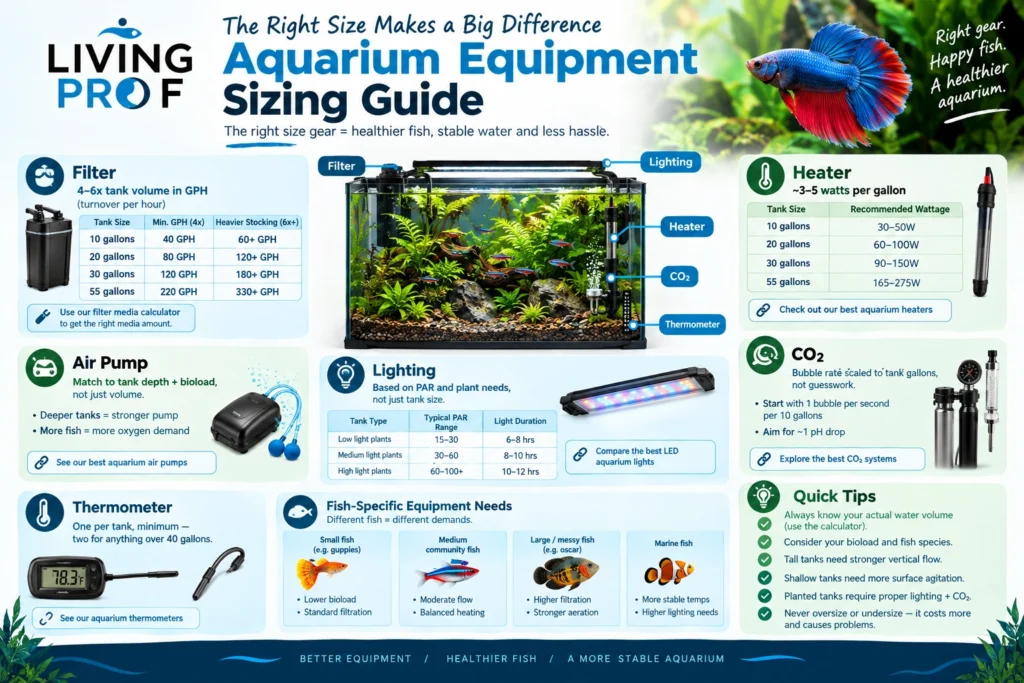
Cross-reference your full setup with the tank capacity and equipment guide once you have your media sorted — it’ll help you make sure your filter, heater, and lighting are all properly matched to your tank volume and fish load. FYI, sorting all this out at the start saves you months of troubleshooting later.
Frequently Asked Questions
Can I mix different brands of filter media? Yes, absolutely. Beneficial bacteria colonise any suitable porous surface — they don’t care what brand the ceramic ring is. Mix and match based on surface area and price without worrying about brand compatibility.
How do I know if I have enough biological media? Test your water. If ammonia and nitrite consistently read zero in a stocked tank, your biological filtration is doing its job. If you see ammonia spikes between water changes, your bio media capacity is likely insufficient for your bioload.
Does more biological media always mean better filtration? More bio media means more potential surface area for bacteria — but bacteria only colonise to the level your tank’s waste supports. An overstocked tank with huge amounts of bio media still needs adequate flow through that media to work properly. Media volume and flow rate work together.
Should I seed new media with bacteria from my existing filter? Yes — this is one of the best things you can do when setting up a new filter or adding media. Place new ceramic rings in your existing filter for 2–4 weeks before moving them. The established bacteria colony seeds the new media quickly and you avoid a full cycle wait.
My water is clear but I keep getting ammonia spikes — why? Clear water doesn’t equal good water chemistry. Ammonia is invisible. If you’re getting spikes, your biological media isn’t processing waste fast enough — either your media volume is insufficient, your flow is too low through the bio media, or you recently cleaned too much media at once and crashed your colony.
Is lava rock a good biological media? Yes, genuinely. Lava rock is highly porous, cheap, and provides excellent surface area for bacteria. The main downside is that it can be rough on hands during cleaning and it’s heavier than ceramic. Rinse it thoroughly before use to remove dust.
Do I need chemical media running all the time? No. Activated carbon is useful for specific situations — removing tannins from new driftwood, clearing medication after a treatment, or polishing water. You don’t need it running 24/7 in a well-maintained tank. Save the filter space for more biological media instead.
How does fish disease treatment affect my filter media? Most medications — especially those treating common freshwater fish diseases — either get absorbed by activated carbon (so remove carbon during treatment) or can harm your bacterial colony directly. Some antibacterial treatments will crash your cycle. Always research the medication’s effect on beneficial bacteria before dosing, and monitor ammonia closely during and after treatment.
Can I have too much biological media? In practice, no — more biological media capacity is almost always fine. The only issue is if adding so much media restricts your flow rate significantly, which reduces the water-to-bacteria contact time and actually makes filtration less effective. Balance media volume with adequate flow through the filter.
My filter smells bad — what does that mean? A healthy filter smells earthy, like soil. A strong sulphur or rotten egg smell usually means anaerobic conditions have developed — areas with no oxygen where the wrong type of bacteria thrive. This often happens when mechanical media gets too clogged and flow drops. Clean your coarse mechanical media, check your pump is running properly, and make sure water is flowing through all sections of your filter.