| Topic | Quick Answer |
|---|---|
| Most common reptile illnesses | Respiratory infections, metabolic bone disease, parasites, mouth rot |
| Main cause of disease | Incorrect temperature, humidity, diet, or dirty enclosures |
| Early symptoms to watch | Lethargy, swelling, wheezing, poor appetite |
| Prevention | Correct heating, balanced diet, clean enclosure |
| Helpful care guides | See Bearded Dragon Care Guide and Leopard Gecko Care Guide for Beginners |
Why Reptile Diseases Sneak Up On Owners
Alright… quick question. Ever looked at your reptile and thought “huh, something feels a bit off… but I can’t explain why?” Yeah, that moment happens to almost every keeper sooner or later. Reptiles hide illness really well. Like… suspiciously well. By the time symptoms show, the problem already existed for a while. Annoying, honestly.
Most health problems start with incorrect care, not some mysterious disease. Temperature too low. UVB light missing. Diet slightly wrong for months. Little things stack up slowly, and then the reptile suddenly acts sick. I learned this the hard way with my first lizard years ago… tiny mistake, big headache later. Kinda frustrating tbh.
Beginners often ask: “Do reptiles get sick easily?” Well… yes and no. Healthy reptiles rarely get sick. But poor habitat conditions cause issues pretty fast.
For example:
- Low heat → poor digestion → infection risk
- Poor diet → weak bones
- Dirty enclosure → parasites
Many new owners skip care research and jump straight to buying the animal. Bad move lol. Reading something like the Bearded Dragon Care Guide or the Leopard Gecko Care Guide for Beginners usually prevents half the issues people run into.
Another funny thing… reptiles don’t scream in pain like mammals. Instead they show tiny clues:
- Less movement
- Refusing food
- Sitting in odd positions
- Closed eyes during daytime
Those signs look small, but they mean a lot.
So the real trick? Catch problems early. Once you learn the warning signals, reptile care becomes way easier. Not perfect… but easier, yeah.
Next up, let’s talk about the disease I see the most in captive reptiles — respiratory infections.
And wow, they show up more often than people expect :/
Respiratory Infections in Reptiles (Symptoms & Treatment)
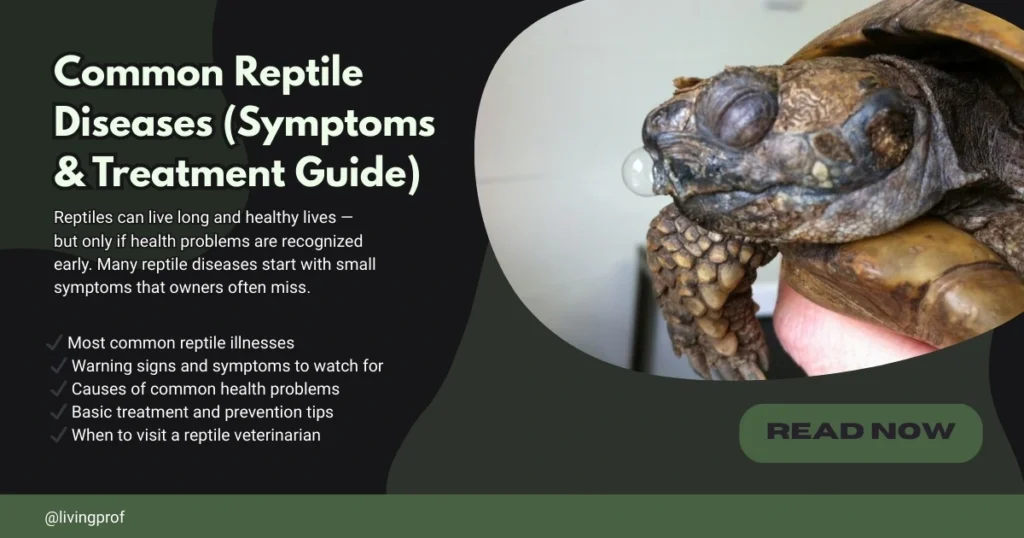
Respiratory infections show up in reptiles when temperatures drop too low or humidity swings the wrong direction. Sounds simple, right? Yet I see this mistake constantly. A snake or lizard sits in a slightly cold tank for weeks… and then boom, breathing problems start.
First sign usually looks subtle. The reptile breathes with its mouth open sometimes. Maybe a tiny wheeze. Some keepers ignore it because the animal still moves normally. That’s where things go wrong.
Common symptoms include:
- Open mouth breathing
- Wheezing or clicking sounds
- Mucus around nose
- Lethargy
- Loss of appetite
One time I noticed a faint clicking sound when my gecko breathed. At first I thought the enclosure equipment made the noise. Turns out… nope. Respiratory infection starting. Vet treatment fixed it quick, luckily.
Temperature errors cause most cases. Reptiles rely on external heat to run their immune system. Without proper warmth, their body struggles to fight bacteria.
That’s why proper heating matters so much.
Basic heating rules:
- Provide a warm basking spot
- Maintain stable night temperature
- Avoid cold drafts
Many keepers accidentally create temperature swings without realizing it. Cheap equipment or incorrect placement can cause that. A reliable heat setup and accurate monitoring solve most of the problem.
Respiratory infections rarely disappear on their own. If symptoms appear, a reptile vet usually prescribes antibiotics and supportive care. Early treatment works fast. Waiting too long makes recovery harder.
So ask yourself honestly…
Do you check enclosure temperatures daily? Or just assume everything stays fine?
Yeah, I used to assume too. That habit changed real quick.
Metabolic Bone Disease (MBD): The Diet Mistake Many Owners Make
Metabolic Bone Disease… or MBD… probably ranks as the most common reptile health problem in captivity. And the frustrating part? Owners cause it accidentally.
The problem starts with calcium imbalance.
Reptiles need calcium plus UVB light to keep bones strong. Remove one of those pieces and the body struggles to absorb nutrients. Over time bones weaken, bend, or fracture. Sounds scary, because honestly it is.
Typical symptoms include:
- Soft jaw or rubbery mouth
- Swollen limbs
- Twitching muscles
- Difficulty walking
- Deformed spine
I once saw a young bearded dragon with legs that bent sideways. The owner fed only mealworms for months. No calcium powder, no UVB lamp. Poor guy never had a chance.
Diet fixes prevent most MBD cases. Good feeding habits matter more than fancy equipment sometimes.
Important diet rules:
- Dust insects with calcium powder
- Provide UVB lighting
- Offer varied food types
- Follow a feeding schedule
If you’re unsure about feeding routines, check the Reptile Feeding Schedule. That guide breaks down feeding frequency for common reptiles.
Some keepers also test foods using the Reptile Food Safety Checker before offering them. Honestly, that tool saves a lot of guesswork.
Treating MBD early works well. Vets usually recommend:
- Calcium supplements
- UVB correction
- Diet adjustments
Advanced cases take months to improve. So prevention really matters here.
Ever notice how the smallest husbandry mistakes create the biggest problems? Yeah… reptiles kinda punish sloppy setups :/
Internal Parasites in Reptiles
Parasites sound dramatic, but reptiles encounter them pretty often. Wild reptiles carry them naturally, and captive ones sometimes pick them up through contaminated food, substrate, or other reptiles.
Most parasites live quietly in the digestive system at first. The reptile looks fine. Eats normally. Acts normal.
Then the numbers grow.
Symptoms usually appear like this:
- Weight loss
- Runny stool
- Loss of appetite
- Lethargy
Sometimes you’ll notice a reptile eating well but still losing weight. That always raises suspicion for parasites.
A vet confirms parasites through a fecal test. Simple process. Small stool sample, microscope check, done.
Treatment usually involves deworming medication. Many keepers use treatments explained in Praziquantel For Fish – When And How To Use This Deworming Medicine. The article focuses on fish medicine but explains parasite control concepts clearly.
Basic parasite prevention steps include:
- Clean enclosure regularly
- Remove waste quickly
- Avoid feeding wild insects
- Quarantine new reptiles
Quarantine matters more than people think. A single infected reptile can spread parasites through shared tools or substrate.
IMO, parasite control feels boring compared to cool habitat setups… but it prevents serious health issues. Worth the effort honestly 🙂
Mouth Rot (Infectious Stomatitis)
Mouth rot sounds nasty… because it kinda is. This infection affects the mouth tissues of reptiles, especially snakes and lizards kept in poor conditions.
The infection usually begins with minor mouth injuries. Maybe rough substrate scratches the gums. Maybe bacteria enter through leftover food stuck in the mouth.
Early symptoms appear small:
- Swollen gums
- Excess saliva
- Small white patches inside the mouth
Ignore those signs and things escalate quickly.
Later symptoms include:
- Pus in the mouth
- Severe swelling
- Loss of appetite
- Difficulty closing the mouth
I once helped a friend check his snake’s mouth because it stopped eating. We noticed yellowish buildup along the gums. Vet confirmed mouth rot the next day.
Treatment normally involves:
- Antibiotics from a vet
- Cleaning the mouth area
- Improving enclosure hygiene
Good sanitation prevents most mouth rot cases. Clean water bowls. Remove uneaten food. Avoid sharp cage decorations.
Small habits make big differences here.
Shedding Problems and Skin Infections
Healthy reptiles shed their skin regularly. The process looks simple… until humidity levels go wrong.
Poor humidity causes stuck shed, also called dysecdysis. Bits of old skin stay attached, especially around toes, eyes, and tail.
Signs include:
- Patchy skin left behind
- Tight rings around toes
- Cloudy eye caps that remain stuck
This happens often with species like geckos or snakes when humidity drops too low.
Fixing shedding problems usually involves:
- Increasing humidity
- Providing a moist hide
- Gentle soaking
Never pull stuck skin forcefully. That damages the underlying tissue.
Severe shedding problems sometimes lead to infections if skin cracks open. That’s why humidity matters so much in reptile care.
A proper habitat setup prevents most shedding issues, which brings us to the next topic.
How Proper Habitat Setup Prevents Most Diseases
Here’s a blunt truth many experienced keepers accept: most reptile diseases start with bad enclosure setups.
Temperature, humidity, lighting, and diet control everything.
A solid enclosure setup includes:
| Setup Element | Why It Matters |
|---|---|
| Heating | Supports digestion and immune system |
| UVB lighting | Enables calcium absorption |
| Humidity | Allows healthy shedding |
| Clean substrate | Prevents bacteria and parasites |
For example, reptiles like bearded dragons rely heavily on correct lighting and basking zones. The Bearded Dragon Care Guide explains habitat details that prevent most illnesses.
Leopard geckos need different conditions entirely. That’s why the Leopard Gecko Care Guide for Beginners exists — different reptile, different setup.
Beginners often copy random enclosure photos online. That’s risky. Some setups look cool but ignore critical care details.
Ask yourself:
- Does the tank have a temperature gradient?
- Is UVB lighting present if the species needs it?
- Is humidity monitored?
Answer those questions honestly and you already solved half the health problems reptiles face.
Final Thoughts
Reptile health sounds complicated at first. But once you understand the basics, things start making sense.
Most diseases trace back to temperature errors, diet mistakes, or poor sanitation. Fix those factors and reptiles stay healthy for years.
Watch for early warning signs:
- Low activity
- Poor appetite
- Strange breathing
- Swelling or deformities
React early. Small symptoms often signal bigger issues coming.
Honestly, reptile care becomes easier once you observe your animals closely. They tell you when something feels wrong… just in very quiet ways.
And yeah, reptiles definitely keep us humble sometimes :/
Frequently Asked Questions
What is the most common disease in reptiles?
Metabolic Bone Disease (MBD) appears most often. Incorrect calcium intake and missing UVB lighting cause it.
How do I know if my reptile is sick?
Watch for lethargy, appetite loss, swelling, breathing issues, or unusual posture.
Can reptiles recover from respiratory infections?
Yes. Early veterinary treatment and proper temperature correction usually lead to recovery.
Do reptiles need regular parasite checks?
Many vets recommend annual fecal tests, especially for reptiles that eat live insects.
What prevents most reptile illnesses?
Proper husbandry prevents the majority of problems:
- Correct heat
- Balanced diet
- UVB lighting
- Clean enclosure
Simple care done consistently keeps reptiles healthy for a long time.