| Question | Quick Answer |
|---|---|
| How do I find gallons from inches? | Length × width × height ÷ 231 |
| How do I find liters from centimeters? | Length × width × height ÷ 1,000 |
| How many liters in one US gallon? | 3.785 liters |
| How much does water weigh? | About 8.34 lb per gallon |
| Is a “20 gallon” tank really 20 gallons? | Rarely. Glass, substrate, and water level cut the real volume. |
| Which tank shape gives more swim space? | Long tanks beat tall tanks at the same gallon size |
How Fish Tank Dimensions Turn Into Gallons
Ever bought a “40 gallon” tank and wondered why it holds less water than the label says? I did that years ago, and it annoyed me for a week :/ The label gives you a rounded number. The glass, the substrate, and the gap at the top all steal space.
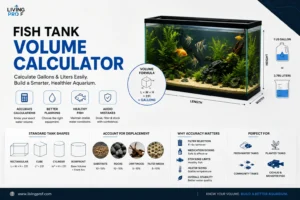
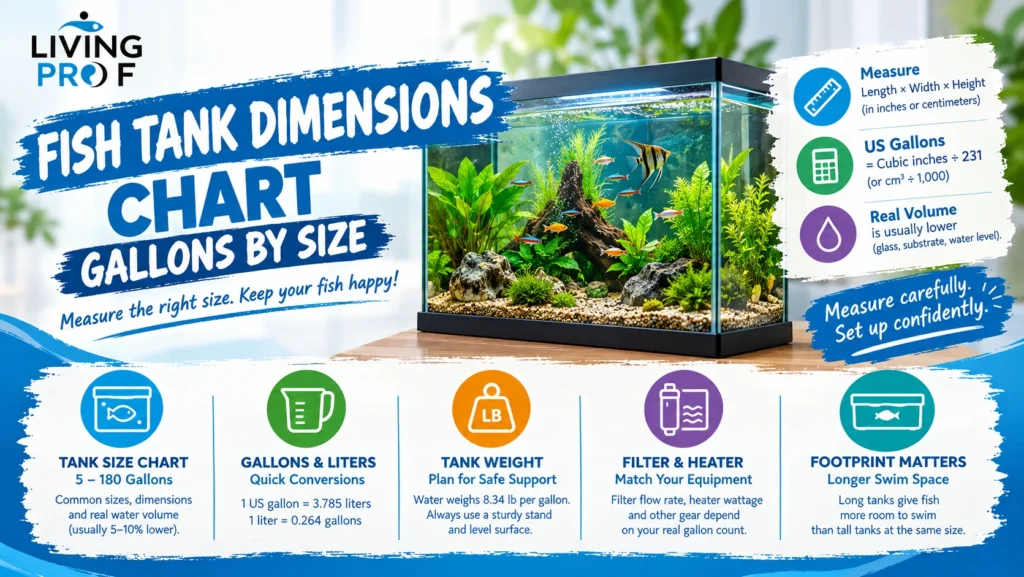
The math itself is simple. Measure the inside length, width, and height in inches, multiply the three numbers, then divide by 231. One US gallon equals 231 cubic inches, so that last step does the conversion for you. A tank that measures 30 × 12 × 18 inches gives 6,480 cubic inches. Divide by 231 and you get about 28 gallons.
Prefer metric? Measure in centimeters, multiply the three numbers, and divide by 1,000. The answer comes out in liters. A tank at 76 × 30 × 46 cm gives roughly 105 liters.
Measure the inside of the tank, not the outside. Glass on a big tank can run 10 to 12 mm thick, and that adds up fast across three sides. I always measure the water line too, not the rim. Nobody fills a tank to the very top, and a water level 1 inch lower can cost you 2 or 3 gallons on a long tank.
You can skip the math if you want. The fish tank volume calculator does it in a few seconds and shows both gallons and liters. If you want to understand the steps behind it, read our guide on how to calculate fish tank volume correctly. It covers odd shapes like bow fronts and hexagons, which break the simple formula.
Why does volume matter so much? Because every number in fishkeeping starts with it. Filter flow rate, heater wattage, medication doses, and stocking levels all depend on your real gallon count. A wrong guess here makes every later decision a little bit wrong. Get this part right and the rest gets easy.
Here’s a quick checklist before you buy any tank:
- Measure the space where the tank will sit.
- Check the outside dimensions listed by the manufacturer.
- Subtract glass thickness to estimate the inside size.
- Run the numbers through the formula or the calculator.
- Compare your result to the nominal gallon label.
Do these five steps and you won’t get surprised at the pet store.
Fish Tank Dimensions Chart: Gallons by Size
This is the chart I wish someone had handed me when I started. It lists the most common tank sizes, their outside dimensions, and the volume you get if the tank were filled to the brim. Your real water volume will run about 5 to 10 percent lower.
| Nominal Size | Dimensions (in) | Dimensions (cm) | Calculated Gallons | Calculated Liters |
|---|---|---|---|---|
| 5 gallon | 16 × 8 × 10 | 41 × 20 × 25 | 5.5 | 21 |
| 10 gallon | 20 × 10 × 12 | 51 × 25 × 30 | 10.4 | 39 |
| 15 gallon | 24 × 12 × 12 | 61 × 30 × 30 | 15.0 | 57 |
| 20 gallon high | 24 × 12 × 16 | 61 × 30 × 41 | 19.9 | 75 |
| 20 gallon long | 30 × 12 × 12 | 76 × 30 × 30 | 18.7 | 71 |
| 29 gallon | 30 × 12 × 18 | 76 × 30 × 46 | 28.0 | 106 |
| 40 gallon breeder | 36 × 18 × 16 | 91 × 46 × 41 | 44.9 | 170 |
| 55 gallon | 48 × 13 × 21 | 122 × 33 × 53 | 56.7 | 215 |
| 75 gallon | 48 × 18 × 21 | 122 × 46 × 53 | 78.5 | 297 |
| 90 gallon | 48 × 18 × 25 | 122 × 46 × 64 | 93.5 | 354 |
| 125 gallon | 72 × 18 × 21 | 183 × 46 × 53 | 117.8 | 446 |
| 180 gallon | 72 × 24 × 25 | 183 × 61 × 64 | 187.0 | 708 |
Notice something odd? The 125 gallon tank calculates to under 120 gallons. The 20 long calculates to under 19. Manufacturers round up, and brands vary by an inch or so, so always check the specs of the exact model you plan to buy.
The chart also shows why footprint matters more than height. A 20 high and a 20 long hold about the same water, but the long tank gives fish 6 more inches of swimming room. IMO the 20 long is the better buy for almost every small setup. Tall tanks look nice, but fish swim side to side, not up and down.
Once you pick a size, you need gear that fits it. Our tank capacity and equipment guide pairs each size with filter, heater, and light recommendations, so you can plan the whole setup in one sitting.
Small Tanks: 5 to 20 Gallons
Small tanks look cheap and easy. In my experience they’re harder to run than big ones, and I’ll explain why in a second.
A 5 gallon tank holds about 21 liters. That’s enough for a single betta and nothing else. Bettas do fine in 5 gallons if you add a heater and a gentle filter. A 2.5 gallon tank works on paper, but the water temperature swings too much, and I’ve lost a betta that way early on.
A 10 gallon tank gives you more room to play with. You can keep a small group of neon tetras, ember tetras, or a trio of guppies. Guppies breed fast, so a 10 gallon fills up within a couple of months if you keep males and females together. Keep only males if you want to avoid that 🙂
The 15 and 20 gallon sizes give beginners the best balance of space and cost. A 20 long handles a school of six to eight small fish plus a few bottom dwellers. Keep it simple, and you’ll find it very forgiving.
Here’s why small tanks cause trouble:
- Waste builds up fast. One missed water change in 5 gallons spikes ammonia within days.
- Temperature swings hit harder. A cold night changes a small tank much more than a large one.
- Fish choices stay limited. Many popular fish need far more room than a store label suggests.
Beginners often think a small tank means less work. It means more frequent work, just in smaller buckets. A 10 gallon needs a weekly water change of about 25 percent, which is only 2.5 gallons. That’s easy, but you can’t skip it.
Small tanks also teach you good habits. You learn to test water, feed lightly, and watch your fish closely. I still tell new hobbyists to start with a 20 long if they have the space. It costs a little more than a 10, yet it gives you a bigger safety buffer when you make mistakes.
Stay away from bowls and tiny novelty tanks under 5 gallons. They can’t hold a stable temperature, and most can’t fit a filter. Fish in those setups usually struggle, even when the owner does everything else right.
Mid-Size Tanks: 29 to 55 Gallons
This is the sweet spot for most hobbyists. Mid-size tanks give you room for a real community without taking over your living room.
A 29 gallon tank measures 30 × 12 × 18 inches and holds roughly 106 liters. It handles a nice school of tetras, a pair of dwarf gouramis, and a handful of bottom feeders. The 40 gallon breeder, at 36 × 18 × 16 inches, gives you a wider footprint, which fish love. I kept my first big community in a 40 breeder, and it ran smoothly for years.
Bottom dwellers like corydoras catfish need floor space more than height. A 40 breeder gives a group of six cories plenty of room to dig around. A tall 29 does not, even though the gallon numbers look similar. That’s the footprint rule from the chart again.
The 55 gallon tank is a classic for good reason. At 48 inches long, it fits fish that need swimming room. But it’s only 13 inches deep front to back, so it feels narrow. Angelfish need height more than length, since adults reach 8 inches tall with their fins. A 55 works, but a 29 is too short for adults, and I learned that the hard way when a pair outgrew their home.
Planning a mixed tank? Read our guide on freshwater community fish combinations before you shop. Some fish look peaceful in the store and turn aggressive at home.
Here’s a simple stocking guide for mid-size tanks:
- 29 gallon: one school of 8 small tetras, 4 corydoras, and 1 dwarf gourami.
- 40 breeder: one school of 10 rasboras, 6 corydoras, and 2 or 3 mid-size centerpiece fish.
- 55 gallon: a pair of angelfish, a school of 12 tetras, and 6 corydoras.
These are starting points, not strict rules. Add fish slowly, a few at a time, and wait two weeks between additions. Your filter needs time to grow bacteria for each new group.
Mid-size tanks also forgive mistakes better than small ones. If you miss a water change, the dilution of waste in 40 or 55 gallons buys you a few extra days. Don’t push your luck though. Test your water every week with a liquid kit, because strips miss problems.
Large Tanks: 75 to 180 Gallons
Big tanks change the hobby. A large tank lets you keep fish that would suffer in anything smaller, and it gives you more stable water too.
A 75 gallon tank measures 48 × 18 × 21 inches and holds about 297 liters. That’s the minimum I recommend for a single adult oscar. Oscars reach 12 inches or more, and they produce a lot of waste. Many sellers pitch oscars as fine in 55 gallons, and I disagree with that. IMO a 75 is the minimum, and a 90 is better.
Discus need a different kind of room. A group of five or six discus works best in a 75 to 125 gallon tank with pristine water and a stable warm temperature. They need height as well, so a 90 or 125 gives them space to display. Discus also hate crowding, and a bigger tank means water chemistry stays steady between changes.
Dreaming bigger? Giant species like arowanas, stingrays, and large catfish need 180 gallons or more, and some need much more. Our monster fish setup guide covers tank size, filtration, and feeding for these animals. If you want a gentler option, check out the top 5 monster fish that stay manageable.
Large tanks come with costs you may not expect:
- Weight: a 125 gallon tank full of water weighs over 1,300 lb.
- Floor space: a 72 inch tank needs a wall with solid support.
- Water changes: swapping 25 percent of 125 gallons means moving about 31 gallons each week.
- Equipment: you will likely need two filters or one large canister.
Use a hose that connects to a sink to make water changes easier. Buckets get old very quickly at this size. I switched to a Python-style siphon after my first 90 gallon, and it saved me hours every month.
One more tip. Buy the biggest tank you can afford and fit. Almost every long-time hobbyist I know says the same thing. People rarely regret going bigger. They almost always regret going smaller, and the upgrade costs more than buying large the first time.
Tank Weight and Stand Rules
Water is heavy, and many new hobbyists forget this until the tank sits in the room. One gallon of water weighs about 8.34 pounds. Glass, substrate, rocks, and the stand add more on top.
Here’s a rough weight table for filled tanks:
| Tank Size | Water Weight | Estimated Total Weight |
|---|---|---|
| 10 gallon | 83 lb | 110 to 120 lb |
| 20 gallon long | 156 lb | 200 to 225 lb |
| 40 gallon breeder | 375 lb | 450 to 500 lb |
| 55 gallon | 473 lb | 600 to 650 lb |
| 75 gallon | 655 lb | 800 to 900 lb |
| 125 gallon | 982 lb | 1,300 to 1,450 lb |
The total column includes glass, substrate, and decor. Your numbers may shift a bit, but this gives you a safe planning range.
A few rules keep your tank and your floor safe:
- Use a stand rated for your tank. Never use a dresser, a bookshelf, or a table that wasn’t built for aquariums.
- Place big tanks against a load-bearing wall. In most homes that means an exterior wall, or a spot above a basement beam.
- Level the stand first. An uneven stand puts stress on the glass seams, and tanks can crack over time.
- Put a foam pad under glass tanks. The pad evens out tiny bumps in the stand top.
Upstairs flats and older buildings need extra care. Anything above 75 gallons deserves a quick chat with a landlord or a building engineer. I’ve seen floors sag under a 125, and the repair cost far more than the tank.
Don’t forget the room around the tank. Leave at least 6 inches behind it for cables and tubing, and keep it out of direct sunlight. Sun on the glass feeds algae and heats the water. Keep the tank away from vents and doors too, since drafts shift the temperature.
Think about access as well. Can you reach the back corners with your arm? Can you open the lid fully without hitting a cabinet? A tank you can’t clean is a tank you won’t clean :/ Put the stand where you can walk around at least two sides, and your weekly routine will feel much easier.
Match Your Equipment to Your Tank Size
Pick the tank first, then pick the gear. Filters, heaters, and lights all scale with gallons, and getting the size wrong wastes money.
Filters work on a simple rule. Aim for a flow rate of 4 to 6 times your tank volume per hour. A 40 gallon tank needs a filter moving 160 to 240 gallons per hour. Heavy waste producers like oscars need the higher end. Our list of the 10 best aquarium filters matches models to tank sizes. If you’re unsure about sizing, read what size filter you need and how much filter media you need.
Heaters follow the 3 to 5 watts per gallon rule for most rooms. A 20 gallon tank wants a 75 to 100 watt heater. A 55 gallon wants 200 to 250 watts. Check out our review of the 7 best aquarium heaters for tested picks. Pair every heater with a thermometer, because heaters fail, and a stuck heater can cook your fish overnight.
Lighting depends on your goal. Fish-only tanks need modest light, while planted tanks need much more. Browse the best LED aquarium lights or use the aquarium lighting calculator to find the right output. Our post on how much light an aquarium needs explains the basics.
Here’s a quick pairing table:
| Tank Size | Filter Flow (GPH) | Heater (Watts) |
|---|---|---|
| 10 gallon | 40 to 60 | 50 |
| 20 gallon | 80 to 120 | 75 to 100 |
| 40 gallon | 160 to 240 | 150 to 200 |
| 75 gallon | 300 to 450 | 250 to 300 |
| 125 gallon | 500 to 750 | 400 to 500 |
Want to go deeper? Our aquarium equipment sizing guide covers every piece of gear, and aquarium filtration 101 explains how filters actually work. Planted tank fans should look at the best CO2 systems, and anyone who travels should check the best aquarium air pumps and automatic fish feeders.
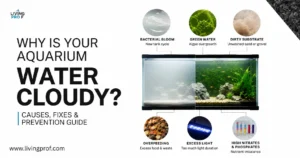
Cloudy water after setup? That’s normal in new tanks, and our post on why aquarium water turns cloudy explains the fix.
Frequently Asked Questions
How many gallons is a 36 inch fish tank?
It depends on the width and height. A 36 × 18 × 16 inch tank (a 40 gallon breeder) holds about 45 gallons by calculation. A 36 × 12 × 16 inch tank holds about 30 gallons. Always check all three measurements.
How do I calculate fish tank gallons from inches?
Multiply length × width × height in inches, then divide by 231. Use the fish tank volume calculator if you want a faster way.
How many fish can I keep per gallon?
The old “one inch of fish per gallon” rule fails often. Fish shape, adult size, and waste output matter more. Research each species, and check our aquarium fish guides for specific tank sizes.
What is the best beginner tank size?
A 20 gallon long or a 29 gallon works well for most beginners. Both give you stable water and plenty of fish choices.
Is a longer tank better than a taller tank?
Yes, for most fish. Fish swim horizontally, so more length and width gives them more usable space at the same gallon count.
How many liters are in a gallon?
One US gallon equals 3.785 liters. A UK imperial gallon equals 4.546 liters, so check which one a seller uses.
How much does a filled 55 gallon tank weigh?
Plan on 600 to 650 pounds with water, glass, substrate, and decor.
What size tank do I need for common fish?
A single betta needs 5 gallons or more. A school of guppies needs 10 to 20. Angelfish need at least 55. An oscar needs at least 75. Discus groups need 75 to 125.
Do I need a bigger filter than the tank size suggests?
Often, yes. Rate your filter for a tank 1.5 to 2 times your real volume if you keep messy fish. Our filter sizing post breaks this down.
Where can I find more tools?
Visit the LivingProf tools page for calculators, or head to the LivingProf homepage for guides on fish and reptiles.
Final word: Tank size sets the rules for everything else in your setup. Measure carefully, use the chart, and buy the biggest tank your space and budget allow. Your fish will thank you, and so will your back when you stop doing emergency water changes at midnight 🙂 Pick your size, check the numbers with the tank volume calculator, and start building.