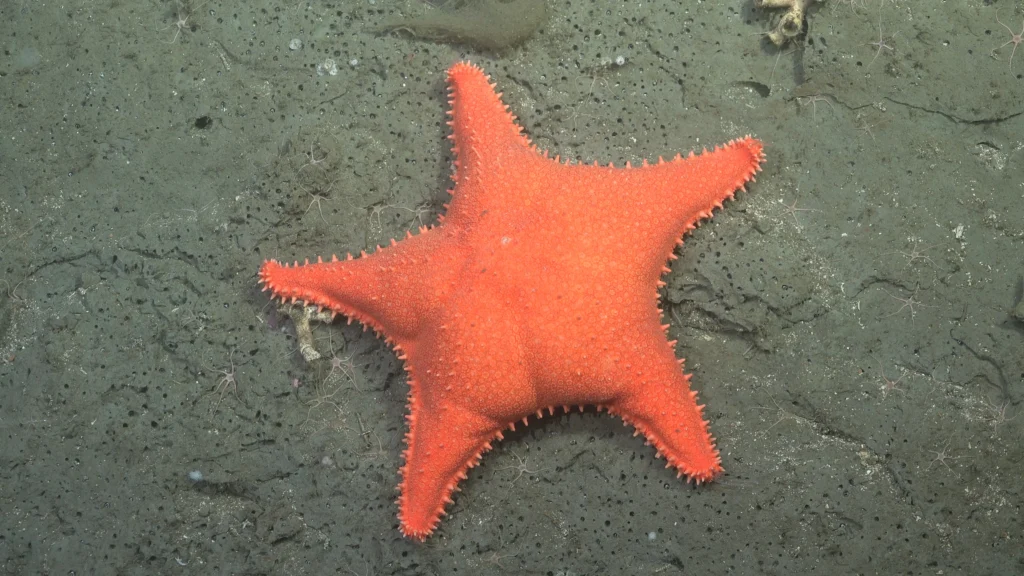
The deep sea is full of surprises. In 2025, a bright orange sea star nicknamed “Patrick” caught the attention of millions of people watching a livestream from Argentina’s Mar del Plata submarine canyon. But that famous sea star was only one small part of a much bigger discovery.
Scientists have now identified 57 potentially new marine species and five new genera from samples collected during an expedition to Argentina’s deep-sea canyons. The discoveries include tiny crustaceans, corals, sea cucumbers, and other animals that live far below the ocean’s surface.
The findings show how much marine life remains unknown, even in places that scientists have already begun exploring.
Key Takeaways
- Scientists identified 57 potentially new marine species and five new genera from samples collected in Argentina’s submarine canyons.
- The research followed a 2025 expedition to the Mar del Plata Canyon aboard the research vessel R/V Falkor (too).
- Researchers examined sea cucumbers, copepods, corals, and other deep-sea animals.
- The orange sea star nicknamed “Patrick” attracted millions of viewers but was not itself a new species.
- More research is needed before every newly identified species can be formally described and confirmed.
1. How Did ‘Patrick’ the Sea Star Become Famous?
In 2025, scientists explored Argentina’s Mar del Plata submarine canyon using advanced underwater technology. Their work was streamed online, allowing people around the world to watch deep-sea animals in their natural environment.
One animal quickly became a fan favourite: a bright orange sea star that viewers nicknamed “Patrick.” Its appearance reminded many people of the cartoon character Patrick Star from SpongeBob SquarePants.
The livestream attracted more than four million viewers, bringing unusual deep-sea creatures into the spotlight.
However, Patrick was not the main scientific discovery. The sea star was left undisturbed, while researchers continued investigating the canyon’s remarkable biodiversity.
The expedition helped demonstrate that the deep ocean is not an empty, lifeless place. It contains a wide variety of animals, many of which are still poorly understood.
2. Scientists Identified 57 Potentially New Marine Species
The discoveries came from samples collected during the 2025 expedition. In July 2026, taxonomists gathered in Buenos Aires, Argentina, to examine and identify the collected animals.
The workshop was hosted at Universidad Maimónides and involved 20 taxonomists and early-career researchers from Latin America and Europe. The work was led by the Nippon Foundation–Nekton Ocean Census in partnership with Schmidt Ocean Institute, with collaboration from CONICET and the Museo Argentino de Ciencias Naturales.
During the workshop, the team identified 57 potentially new marine species and five new genera.
A species is a distinct type of organism. A genus is a broader classification group that can contain several related species.
These discoveries are important because they help scientists understand how much life exists in the deep ocean and how different marine animals are related.
It is also important to understand that identifying a potentially new species is not always the final step. Formal scientific descriptions may require additional examination, genetic analysis, and peer-reviewed research.
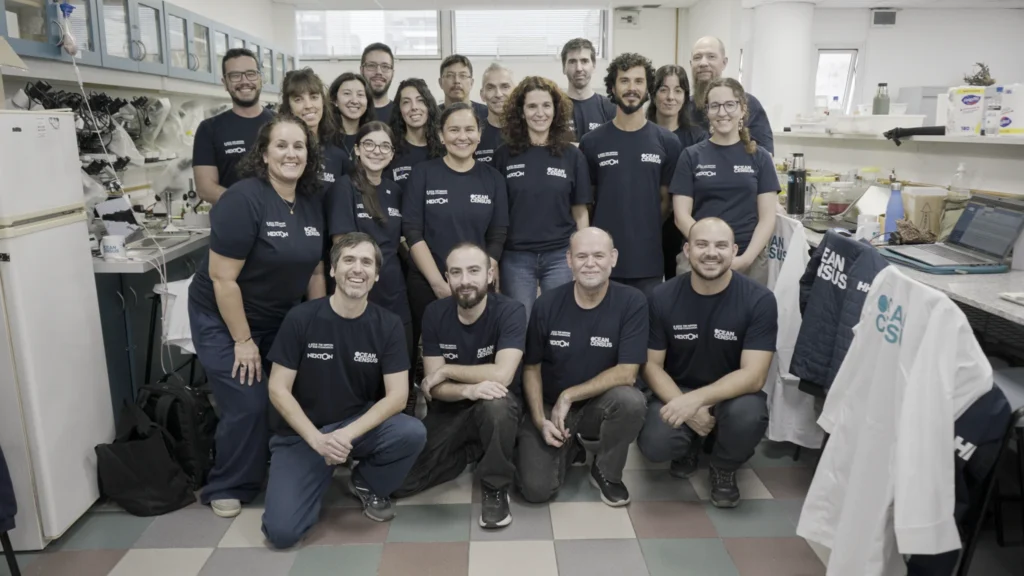
The full team of international taxonomists, regional experts, and early-career researchers assembled at Universidad Maimónides in Buenos Aires. Over two weeks, the collaborative team rapidly identified 57 new marine species and 5 new scientific genera from deep-sea samples, logging their findings directly to the open-access Ocean Census NOVA platform. Image courtesy of the Nippon Foundation-Nekton Ocean Census / Schmidt Ocean Institute.
3. What Kinds of Animals Were Discovered?
The newly identified animals belong to several marine groups. Some are relatively familiar types of sea life, while others are tiny or unusual organisms that are difficult to observe in their natural habitats.
Sea cucumbers
Sea cucumbers are marine animals that often live on the seabed. Many feed on organic material in the sediment, helping recycle nutrients in the marine environment.
Researchers identified a deep-sea sea cucumber nicknamed “Loki.” It belongs to the genus Peniagone and was observed at a depth of approximately 2,577 metres.
The research also identified up to 10 potentially new sea cucumber species among the collected material.
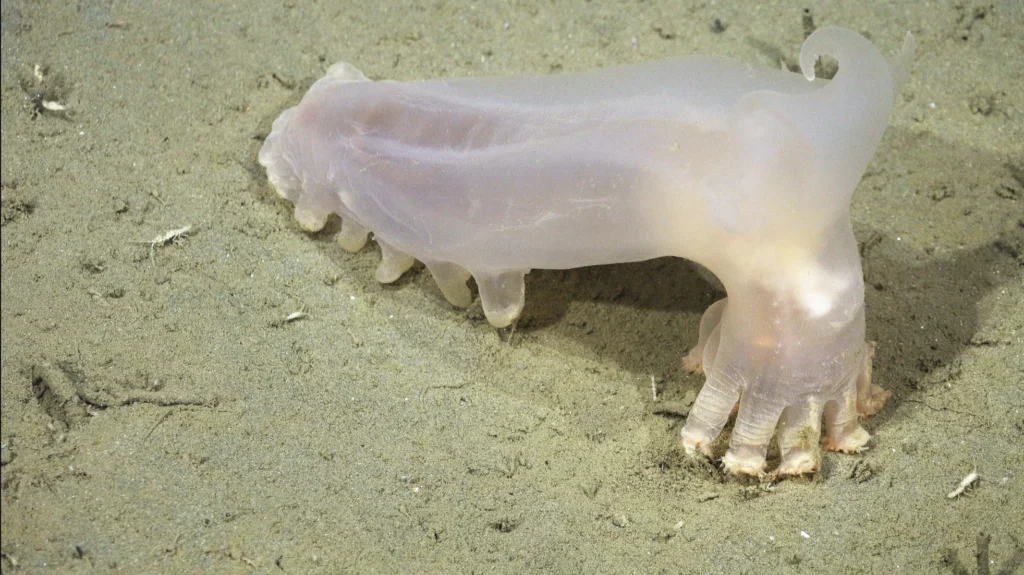
A standout discovery of the workshop, this striking deep-sea holothurian (sea cucumber) was named “Loki” for its prominent horned appendages, reminiscent of the god in Norse mythology. Captured in high-definition in-situ video and images on the seafloor of the Mar del Plata Submarine Canyon, it represents one of up to 10 new holothurian species uncovered during the Argentina workshop. Image courtesy of ROV SuBastian / Schmidt Ocean Institute.
Copepods
Copepods are tiny crustaceans found in marine and freshwater environments. They are important parts of aquatic food webs and serve as food for many other organisms.
Researchers identified 20 potentially new copepod species during the workshop. According to the project’s findings, only around 10% of the collected copepod samples had been examined, and every specimen examined in that group was identified as a new species. The work also identified one new copepod genus.
This suggests that further examination of the collected samples could reveal even more about the biodiversity of the canyon.
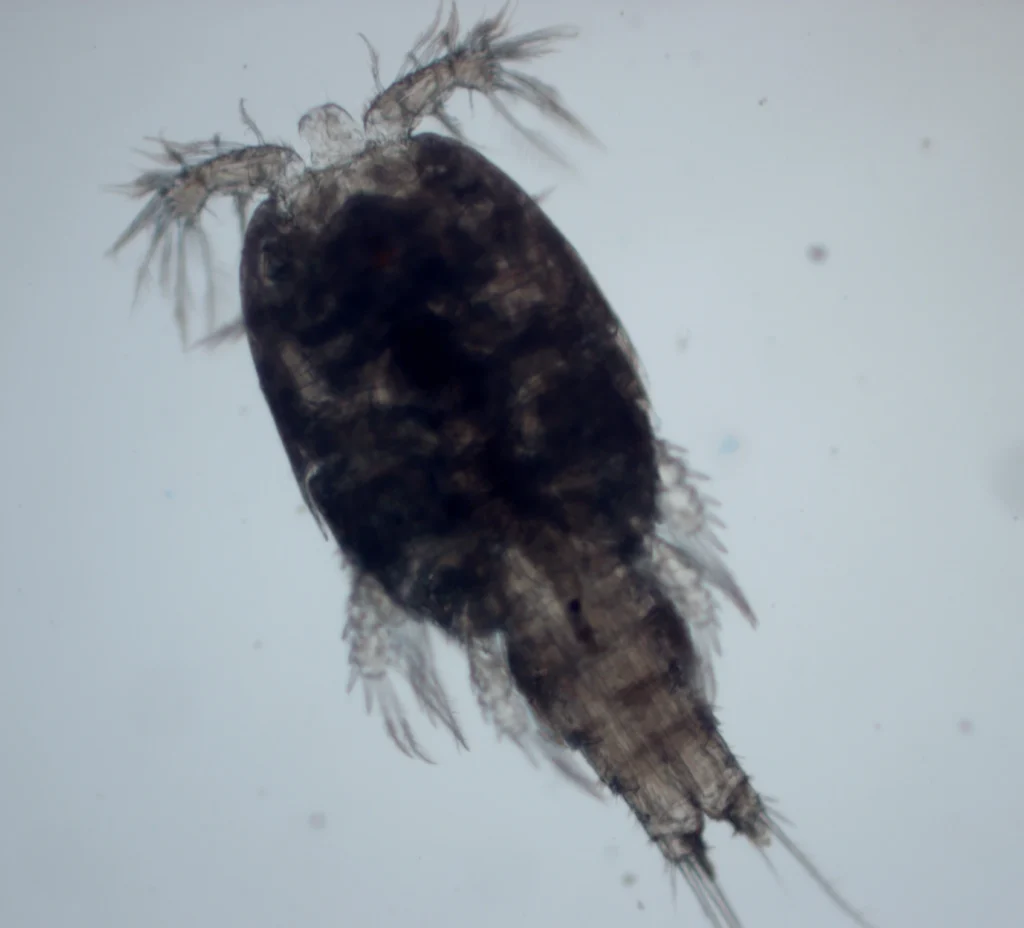
Found between 1,909 and 2,625 meters (6,263 and 8,612 feet) deep in Argentina’s Mar del Plata Canyon and Deep Basin, this tiny copepod is part of a group of crustaceans that play a vital role in deep-sea ecosystems. During the workshop, taxonomists examined just 10% of the copepod samples collected — yet every specimen examined proved to be new to science, contributing to the discovery of 20 new species and one new genus.
Corals and other marine invertebrates
The researchers also identified 22 echinoderms, 14 cnidarians, and one scaphopod among the findings reported by the project.
Echinoderms include animals such as sea stars and sea cucumbers. Cnidarians include corals, sea anemones, and jellyfish. Scaphopods are marine molluscs commonly known as tusk shells.
Some of the coral findings may represent new genera or even a new family, but additional genetic analysis is needed to investigate these possibilities.
These animals play different roles in deep-sea ecosystems, and studying them helps scientists build a clearer picture of life in the canyon.
4. Why Are Argentina’s Submarine Canyons So Important?
Submarine canyons are deep valleys on the ocean floor. Like canyons on land, they can have steep sides and complex terrain. They may also create different habitats over relatively short distances.
The Mar del Plata Canyon lies off the coast of Argentina. Its deep waters provide habitat for animals adapted to cold, dark, and high-pressure conditions.
Exploring such an environment is challenging. Sunlight does not reach the deeper parts of the ocean, and many animals live far beyond the range of ordinary diving equipment.
Researchers therefore use remotely operated vehicles, or ROVs, equipped with cameras, lights, and sampling tools.
During the expedition, the ROV SuBastian helped scientists observe deep-sea animals and collect specimens for later examination.
Discoveries from submarine canyons can improve our understanding of marine biodiversity, species distribution, and the ecosystems that exist far below the surface.
5. How Do Scientists Discover a New Marine Species?
Finding an unusual animal does not automatically mean it is a new species. Scientists must compare it with organisms that have already been described.
The process can involve several steps:
- Collecting specimens: Researchers use equipment such as remotely operated vehicles to observe and collect animals from the seafloor.
- Examining physical features: Taxonomists study body shape, size, structures, and other characteristics.
- Comparing existing research: Scientists compare the specimen with published descriptions and museum collections.
- Conducting genetic analysis: DNA can help determine whether an animal is distinct from known species.
- Publishing a formal description: A new species is formally established through scientific work that documents its distinguishing features and classification.
This process takes time. The 57 discoveries reported from Argentina’s submarine canyons should therefore be understood as potentially new species identified through research, with further work needed for formal descriptions where applicable.
6. What Do These Discoveries Tell Us About Deep-Sea Life?
The findings highlight how much remains unknown about the ocean.
Many deep-sea animals are small, difficult to observe, or live in habitats that are expensive and technically challenging to explore. Even when researchers collect many specimens, identifying them can require specialist knowledge and careful comparison.
The copepod results are particularly interesting because only a small portion of the collected samples had been examined at the time of the workshop. The results suggest that further study of existing material could uncover additional diversity.
These discoveries also provide useful information for future research. Knowing which species live in a particular habitat helps scientists investigate food webs, biodiversity, and how marine ecosystems may respond to environmental changes.
For aquarium enthusiasts, deep-sea discoveries are a reminder of the enormous variety of aquatic life. However, deep-sea animals should not be treated as suitable aquarium pets simply because they are fascinating. Many require environmental conditions that home aquariums cannot safely reproduce.
If you keep aquarium fish, explore our guides to rare tropical freshwater aquarium fish and marine and exotic saltwater fish.
You can also learn more about keeping aquarium water healthy in our complete aquarium filtration guide.
7. Why This Research Matters for Marine Conservation
Discovering new species is not only about giving animals scientific names. It also helps researchers understand the variety of life that exists in the ocean.
If scientists do not know which species live in a particular area, it becomes harder to assess how environmental changes or human activities may affect them.
Deep-sea habitats can be vulnerable to disturbance, and researchers still have important questions about how many species live there, how they interact, and how widely they are distributed.
The research from Argentina provides a valuable starting point for future investigations. It also demonstrates the importance of cooperation between research institutions, taxonomists, and ocean-exploration teams.
Schmidt Ocean Institute has reported plans for another expedition to a different submarine canyon in February–March 2027. Further exploration could help scientists compare habitats and learn more about deep-sea biodiversity.
8. What Happens Next?
The next step is continued scientific examination of the collected specimens.
Researchers may need to carry out genetic analysis, compare specimens with existing collections, and publish formal descriptions. Some proposed classifications may change as new evidence becomes available.
The discoveries also raise new questions. How many more species live in Argentina’s submarine canyons? Are some found only in these habitats, or do they occur in other parts of the ocean as well?
Future expeditions and laboratory research may help answer these questions.
For now, the story of Patrick the sea star has helped bring public attention to a much bigger scientific finding: a deep-sea canyon can hold an extraordinary range of life, much of which is still waiting to be studied.
Frequently Asked Questions
Was Patrick the sea star a new species?
No. The orange sea star nicknamed Patrick attracted attention during the 2025 livestream, but it was not itself reported as a new species.
Where were the 57 potentially new marine species found?
The findings came from samples collected during research in Argentina’s submarine canyons, particularly the Mar del Plata Canyon expedition.
Who discovered the new species?
The identifications were made by taxonomists during a workshop in Buenos Aires in July 2026. The work was led by the Nippon Foundation–Nekton Ocean Census in partnership with Schmidt Ocean Institute, with collaboration from CONICET and the Museo Argentino de Ciencias Naturales.
What is the deepest animal mentioned in the findings?
One highlighted animal, the sea cucumber nicknamed Loki, was observed at approximately 2,577 metres deep.
Are all 57 species officially confirmed?
The reported findings describe 57 potentially new species identified by researchers. Formal descriptions and confirmation may require further analysis and peer-reviewed scientific publications.
Why do scientists explore the deep ocean?
Deep-sea exploration helps researchers discover species, understand marine ecosystems, study biodiversity, and gather information that can support future conservation work.
Could these deep-sea animals live in a home aquarium?
Most should not be considered suitable aquarium pets. Deep-sea species may require extreme pressure, low temperatures, specialised food, and other conditions that are difficult or impossible to reproduce in a home aquarium.
Final Thoughts
The viral sea star known as Patrick may have been the star of the livestream, but the bigger story is the extraordinary biodiversity hidden in Argentina’s deep-sea canyons.
Researchers identified 57 potentially new marine species and five new genera, including sea cucumbers, copepods, corals, and other invertebrates. Further study will help establish formal descriptions and reveal more about these animals.
The discovery is a reminder that the ocean still holds many mysteries—and that careful scientific exploration can help us understand and protect the life found there.